There is a particular kind of exhaustion that comes from knowing you are capable and still feeling as though you cannot find your way forward. You have read the books. You have listened to the podcasts. You have bought the programs, made the plans, written the goals, changed the strategy, downloaded another app, reorganised the calendar and promised yourself that this time you are going to follow through. Yet somewhere beneath all that effort, something still feels unsettled.
Sometimes you call it procrastination. Sometimes you say you need more clarity, more time, more money, more energy or a better strategy. You might tell yourself you have lost your motivation, lost your confidence, lost your direction or somehow become less capable than you used to be. If you have achieved a great deal already, the disconnect can feel even more confusing because there is evidence everywhere that you know how to make things happen. So why does the next step suddenly feel so difficult?
This is one of those articles I want you to bookmark and come back to. Read it once for the ideas. Read it again later for the places where you recognise yourself. There is a lot here, because the problems we tend to label as separate — time, money, burnout, procrastination, boundaries, self-trust, intuition, identity, motivation, visibility, even manifestation — are often connected by the same deeper thread.
Why Another Strategy Often Doesn’t Solve the Real Problem
When life feels uncertain, the mind naturally searches for something concrete. Tell me what to do. Give me the five steps. Show me the plan. Tell me which business model works, what morning routine to follow, what decision to make, what goal to choose, what conversation to have, what boundary to set.
Strategy can be incredibly valuable. I teach strategy. I use strategy. I love understanding how things work. The problem begins when we ask strategy to solve something that exists underneath strategy.
Imagine you are body surfing in the ocean. You catch a wave, mistime it and suddenly get dumped. You are underwater, spinning, the force of the water turning you over and over. You know how to swim. You have known how to swim for years. Yet in those few disorienting seconds, you cannot tell which direction is up.
Someone standing safely on shore could yell, “Swim up!”
Perfectly logical advice.
Completely useless while you are still spinning.
The first thing you need is orientation.
The same thing happens internally. When your nervous system is overloaded, your emotional world is noisy, your attention is stretched across everybody else’s needs and you have spent long enough overriding what you know, the problem may no longer be a lack of information. You have lost access to your internal reference point.
You can be extraordinarily intelligent and still become disorientated. You can be highly capable and temporarily lose access to your capability. You can know exactly what to do in theory and still find yourself unable to activate it because the internal state from which you are trying to move is braced, scattered, exhausted or afraid.
This is why I come back again and again to one of the foundational principles in my work: stabilise before you mobilise.
I learned that principle long before I became a coach. In emergency paramedicine, urgency never removes the need for stabilisation. You establish what is happening, create as much safety as possible, stabilise the system and then move. Internally, the sequence matters just as much. When the body softens, the mind has greater capacity to reorganise. When the noise reduces, perception expands. When pressure eases, solutions that were obscured by urgency can become visible again.
Sometimes the most strategic thing you can do is stop searching for another strategy long enough to locate yourself.
How Self-Trust Gets Lost Through Repeated Self-Abandonment
Most people do not wake up one morning and suddenly decide they no longer trust themselves. Self-trust is usually eroded through repetition.
Perhaps somebody important in your life repeatedly questioned your experience. They dismissed what you felt, rewrote what happened, told you that you were too sensitive, too emotional, too dramatic, too difficult or simply wrong. Maybe this happened in childhood. Maybe it happened later through an intimate relationship, a business partnership, a workplace, a family system or another environment where maintaining connection felt important.
When another person continually challenges your reality, maintaining your own sense of reality requires a strong internal anchor. If that anchor has never had the opportunity to fully develop, confusion begins to creep in.
Maybe I misunderstood.
Maybe I am overreacting.
Maybe they are right.
Maybe I should let it go.
Maybe it would be easier if I changed.
The consequence is larger than the individual disagreement. Every time you override what you sensed in order to maintain connection, peace, approval or belonging, you rehearse a subtle form of self-abandonment.
Eventually, checking outside yourself becomes faster than checking inside.
What do they think?
What would make them happy?
What should I do?
What is the sensible choice?
What will keep everybody calm?
What will make me acceptable?
What will make me safe?
Slowly, the centre of authority moves away from you.
Then something fascinating happens. Your intuition may still speak. You might receive an internal nudge, an idea, a moment of knowing, a feeling that something is wrong or a pull towards something new. Yet the signal is followed immediately by another voice questioning it.
Later, when events unfold, you find yourself saying, “I knew it.”
That sentence matters.
“I knew it” means the signal was there.
The deeper issue was whether you trusted yourself enough to honour it.
Confusion Is Often a Sign That Your Inner Authority Has Been Overridden
Confusion is one of the most important words in this conversation because it is often how the loss of self-trust presents in everyday life.
People rarely come to me saying, “Katie, years of external conditioning have disrupted my internal authority and I am struggling to differentiate between protective responses and intuitive guidance.”
They say, “I’m confused.”
They say, “I don’t know what I want anymore.”
They say, “I keep second-guessing myself.”
They say, “I used to be decisive.”
They say, “I have so many ideas and I don’t know which one is right.”
They say, “I know what I should do, but I’m still not doing it.”
There is often tremendous relief in understanding that confusion does not automatically mean you need more information. Sometimes you have too much information and insufficient connection with the internal filter that tells you what belongs to you.
If you have spent years learning to privilege other people’s expectations over your own signal, another expert opinion can actually add to the noise.
You are standing in the middle of twenty signposts asking which one is yours.
That is why Soul Goal Mapping begins with returning to yourself beneath the noise, expectations and conditioning. Before you choose the destination, it helps to know whose map you are reading.
Nervous System Regulation Changes What You Can Perceive
Your internal state influences the way you interpret information.
When you are calm enough to access curiosity, possibility and perspective, you can see options. You can imagine different futures. You can solve problems creatively. You can tolerate uncertainty because uncertainty does not automatically equal danger.
When your system is organised around survival, the horizon narrows.
Your attention naturally starts scanning for threat. What could go wrong? Who is upset? What have I forgotten? Where am I vulnerable? What do I need to control? What am I about to lose?
This is one reason asking somebody who is deeply overwhelmed, “What do you want your life to look like in a year?” can produce a deer-in-headlights response.
Their imagination has not disappeared. Their system is busy solving a much shorter time horizon.
How do I get through today?
How do I keep everyone okay?
How do I pay this bill?
How do I stop this person being angry?
How do I make this problem go away?
Vision requires capacity.
This also becomes crucial when we talk about intuition. There is a popular idea in personal development that contraction means no and expansion means yes. Human beings are more nuanced than that. A nervous system that has learned to associate unfamiliarity with threat may contract around an extraordinary opportunity simply because the experience is new.
Visibility can feel dangerous.
Receiving more money can feel dangerous.
Being deeply loved can feel dangerous.
Setting a healthy boundary can feel dangerous.
Rest can feel dangerous.
Success can feel dangerous.
Freedom can feel dangerous.
Avoidance, on the other hand, can create immediate relief. Relief does not automatically mean alignment.
Learning to hear your intuition therefore requires discernment. You are learning to differentiate between the quieter signal of your inner guidance and the louder protective responses of a system trained to anticipate danger.
That is part of what I mean when I talk about energy balancing and alignment. You are reducing enough internal noise to hear the signal underneath it.
Boundaries and Individuation Are Essential for Self-Trust
There is another reason many highly sensitive, caring and empathic people struggle to hear themselves clearly: they are extraordinarily attuned to everybody else.
They notice a shift in someone’s expression.
They feel the change in the room.
They detect disappointment before a word has been spoken.
They anticipate what another person needs.
They know when somebody is uncomfortable and instinctively move to make it better.
Sensitivity can be an extraordinary strength. Without healthy individuation, however, another person’s internal state can quickly become your responsibility.
If you cannot clearly distinguish what is yours from what belongs to someone else, it becomes extremely difficult to make self-trusting decisions.
Your choice makes somebody disappointed, so you change the choice.
Your boundary makes somebody angry, so you soften the boundary.
Your dream inconveniences somebody, so you postpone the dream.
Your success makes somebody uncomfortable, so you shrink.
Your truth threatens the existing relationship dynamic, so you edit yourself.
Healthy boundaries are therefore much deeper than learning how to say no. They are part of knowing where you end and another person begins.
My feelings belong to me.
Your feelings belong to you.
My choice belongs to me.
Your response belongs to you.
My responsibility is to communicate with integrity. I do not need to control how every person interprets that communication.
That level of individuation is a journey, particularly when your nervous system has spent decades associating other people’s approval with connection and safety.
This is also why new boundaries sometimes come out harshly at first. After years of over-accommodating, people can swing the pendulum towards defensiveness because they are still trying to create external protection for something that has not yet become internally secure.
As self-trust strengthens, boundaries often become quieter.
You no longer need the other person to agree.
Over-Responsibility Can Remove You From Your Own Life
Look at your calendar.
Seriously.
Your calendar can tell you an enormous amount about the identity you have been rehearsing.
Whose priorities are represented there?
Whose appointments?
Whose emergencies?
Whose dreams?
Whose deadlines?
Whose needs?
Many people tell me they have a time problem when what they really have is a prioritisation pattern.
They have become the person everybody can rely upon. The organiser. The caretaker. The fixer. The responsible one. The person who remembers everything, notices everything and holds everything together.
There is often an unconscious relational contract sitting underneath this:
If I take care of your needs, eventually you will take care of mine.
Except nobody else necessarily knows they signed that contract.
Your needs keep being postponed. The resentment grows quietly in the background. You become tired, irritable or depleted and cannot quite understand why, because technically you chose to say yes.
Resentment can be valuable information. It can reveal the places where giving has moved beyond generosity into self-exclusion.
You may be included in everybody else’s life while barely appearing in your own.
That does not mean abandoning the people you love. It means recognising that you are also one of the people you are responsible for.
Your current responsibilities often reflect the accumulated effect of past priorities. Every automatic yes, every obligation you absorbed, every role you accepted and every need you continually placed behind someone else’s has helped build the life you are currently standing inside.
If you want a different future, at some point your priorities have to begin reflecting it.
The High Achiever and the Self-Abandoner Can Be Running the Same Pattern
There are two people I see again and again in this work, and from the outside they can look almost opposite.
The first person has disappeared from their own life.
They procrastinate. They feel overwhelmed. They struggle to connect with a vision. Their days are filled with everybody else’s requirements. They have ideas and dreams, yet there never seems to be enough time, energy, permission or space to activate them.
The second person is achieving constantly.
They set the goal, hit the goal, raise the goal.
They work hard, learn quickly, push through resistance and produce impressive results. Yet the satisfaction does not last. The moment one mountain is climbed, they start looking for the next.
One disappears.
The other outruns themselves.
Yet underneath both can be the same organising belief:
As I am, I am not enough.
The self-abandoner attempts to secure belonging through accommodation.
The achiever attempts to secure worth through accomplishment.
Both have outsourced something essential.
One says, “If everybody else is okay, then I am safe.”
The other says, “When I achieve enough, then I will finally feel enough.”
That is why success created from an anxious internal state can feel strangely hollow. You reach the outcome expecting it to change the way you feel about yourself, only to discover that the person who arrived at the destination brought the same internal operating system with them.
The goal changed.
The internal relationship did not.
This is where people become addicted to the destination while missing the joy of the journey.
The Permission Gap: When You Already Know What You Want
Some people genuinely need clarity. Others already know what they want and have known for quite some time.
The problem is permission.
You can see the business.
You can see the book.
You can see the relationship changing.
You can see yourself leaving the role.
You can see the move.
You can see the travel.
You can see the new version of your life.
Then the nervous system introduces the consequences.
Who will be disappointed?
What will people think?
What if I fail?
What if I succeed and everything changes?
What if I leave what I know and discover I cannot navigate what comes next?
This is why “better the devil you know” has such psychological power. Familiarity is frequently mistaken for safety.
The familiar may be miserable.
The familiar may exhaust you.
The familiar may no longer fit.
Yet you know how to survive there.
The unknown asks something different of you. It asks you to trust your capacity to navigate what you cannot yet see.
That is why self-trust matters so much more to me than confidence.
Confidence often relies on previous evidence. I feel confident doing something I already know how to do.
Self-trust allows me to enter territory I have never walked before because I trust my ability to listen, learn, adjust and respond along the way.
You do not need certainty about every step when you trust yourself to meet the steps as they appear.
Your Current Reality Is Evidence, Not Your Identity
One of the most powerful shifts you can make is to stop using your existing circumstances as permanent evidence of who you are.
You look at the bank balance and say, “I’m bad with money.”
You look at the business and say, “I’m not good at sales.”
You look at your hesitation and say, “I’m not confident.”
You look at your current visibility and say, “I’m not someone who puts myself out there.”
You look at the relationship and say, “I always choose the wrong people.”
You look at the calendar and say, “I never have enough time.”
Notice the jump.
An experience becomes an identity.
A result becomes an “I am.”
Your current reality contains real information. Ignoring reality is rarely useful. The bank balance matters. The sales numbers matter. The calendar is genuinely full. The relationship may genuinely be difficult.
The question is whether you are going to turn that information into a permanent instruction.
Your current reality is the accumulated effect of an enormous number of previous thoughts, beliefs, emotional patterns, priorities, behaviours, habits, decisions and circumstances. It tells you something about what has been operating until now.
It does not get the final vote on who you become next.
This is where identity work becomes so important.
If you spend ten minutes imagining a new future and the remaining waking hours reacting from the identity that produced the existing reality, the old identity is still receiving most of the rehearsal.
Your next identity cannot remain an occasional visualisation.
You have to become familiar with them.
How does that version of you make decisions?
What do they prioritise?
What do they tolerate?
What do they no longer need to prove?
What do they believe they can navigate?
What happens when something goes wrong?
How do they speak to themselves?
How do they handle money?
How do they handle visibility?
How do they receive support?
How do they respond when somebody disapproves?
The ceiling of your current limitations often becomes the floor of your next identity.
Growth asks you to step onto that floor.
Energetic Alignment Is an Internal State Reorganisation
This is why I place so much emphasis on energy.
When I talk about harnessing and mastering your energy, I am talking about becoming more conscious of the internal organisation from which you are living.
Where is your attention going?
What emotional states are you rehearsing?
What assumptions are operating beneath your choices?
Where are you leaking energy through resentment, vigilance, guilt, people-pleasing, comparison, proving and second-guessing?
Where are you holding tension because one part of you wants expansion while another part is committed to remaining familiar?
Most people think they have a lack-of-money problem, lack-of-time problem or lack-of-energy problem.
Sometimes there genuinely are practical resource constraints. Yet simply increasing the resource does not automatically change the internal system that allocates it.
Give more time to somebody who believes everybody else comes first and the extra time can quickly belong to everybody else.
Give more money to somebody who cannot yet feel safe receiving or holding it and the money may disappear through the same patterns that shaped their previous financial reality.
Give another strategy to somebody organised around proving and they can turn the new strategy into another way to hustle.
This is the deeper meaning behind so within, so without.
Every thought creates your reality.
That does not mean every thought is consciously recognised. Most of the thoughts organising your life are operating beneath conscious awareness. A belief is simply a thought repeated often enough that you have accepted it as true, and once it becomes part of your internal operating system, it begins organising the way you perceive the world.
Your thoughts and beliefs influence the feelings and emotions you experience. Those create physiological sensations in the body. From there, you make decisions, take action or avoid action, repeat behaviours, form habits and eventually create results. Those results become the external evidence you point to as proof that your beliefs were true all along.
Thoughts and beliefs → feelings and emotions → physical sensations → decisions, actions and behaviours → habits → results and reality.
Then the loop reinforces itself.
This is what I mean by so within, so without. Your external reality mirrors your internal operating system through the lens of consciousness from which you are perceiving, choosing and acting. If the beliefs underneath that operating system remain unconscious, you can keep recreating the same patterns while genuinely believing the external circumstances are simply happening independently of you.
Becoming conscious changes the equation because now you can identify the thought, question the belief, reorganise the internal state and begin creating from a different identity.
What matters is recognising how profoundly your internal assumptions influence what you notice, what you expect, what you tolerate, what you pursue, what you avoid, what you repeatedly choose and what you believe you are capable of holding.
Those patterns shape reality over time.
When you learn to harness and master your energy, you step into your power because you are no longer allowing every external demand, every old identity and every protective pattern to decide where your life force goes.
You begin directing it.
Manifestation Requires Identity Congruence and Capacity
This is also where manifestation becomes much more interesting than simply wanting something.
You can consciously say, “I want more money,” while repeatedly affirming, “I’m terrible with money.”
You can consciously want a thriving business while identifying as somebody who hates being visible, cannot sell and does not understand business.
You can want a deeply loving relationship while operating from the expectation that people eventually leave.
You can want freedom while continually reinforcing the identity of the person everybody depends upon.
The conscious desire and the internal identity are pulling in different directions.
That internal contradiction creates friction.
You may call it procrastination.
You may call it sabotage.
You may call it lack of motivation.
You may call it bad luck.
Whatever name you give it, the practical question remains the same:
Are you becoming congruent with what you say you want?
There is also a difference between receiving something and having the capacity to hold it.
Someone can land an extraordinary opportunity, a major client, a large sum of money, a relationship, visibility or rapid success and then find themselves unexpectedly overwhelmed by it.
The new reality feels fraudulent because it does not yet feel familiar.
So they contract.
They overwork.
They overspend.
They disappear.
They create conflict.
They undercharge.
They procrastinate.
They find a way back towards the identity that feels known.
This is why I encourage people to rehearse the next version of themselves before the package arrives.
When you order something online, you do not usually spend every five minutes panicking that the package may never exist. You place the order, expect it to arrive, continue living your life and prepare to receive it.
Then the doorbell goes.
“There it is. I’ve been expecting you.”
Imagine relating to your next level with that degree of relaxed expectation.
You have already been meeting the identity capable of holding it.
Self-Trust Is Built in Cents — and in Sense
Perhaps the most important part of all of this is understanding that you do not rebuild self-trust through one heroic act.
You rebuild it in cents.
Small deposits.
One decision honoured.
One promise kept.
One boundary maintained.
One internal signal listened to.
One difficult conversation approached with integrity.
One moment when you notice that you are about to override yourself and choose differently.
Then another.
Then another.
It takes one hundred cents to build a dollar. The individual cent looks almost insignificant by itself, yet enough of them become something substantial.
Self-trust compounds in much the same way.
And there is another layer to this phrase that I love.
In cents. In sense.
Every small act of self-trust is also an act of returning to your senses — to what you notice, what you feel, what you know, what you discern, what your intuition is quietly communicating underneath the noise.
You are building a bank of evidence with yourself.
I listened.
I chose.
I followed through.
I handled the outcome.
I learned.
I can trust myself again.
That evidence matters because the nervous system learns through experience.
Telling yourself “trust yourself” is lovely.
Giving yourself evidence is transformational.
The goal is not to leap from decades of self-abandonment into perfect self-sovereignty by lunchtime.
Take the 1% shift.
Make the deposit.
Build the bank.
Coming Home to Yourself Is a Repeated Practice
There is no single moment where you arrive at yourself and never leave again.
Life changes.
Relationships change.
Businesses change.
Your identity expands.
New levels reveal new edges.
Old conditioning can resurface in unfamiliar environments.
That is why this work is repetitive.
You come home.
You notice.
You recalibrate.
You listen.
You choose.
You move.
Then life gives you new information and you do it again.
The aim is not perfection. The aim is shortening the distance between the moment you leave yourself and the moment you recognise it.
Eventually, self-return becomes familiar.
Your internal authority becomes stronger.
Your boundaries become cleaner.
Your intuition becomes easier to distinguish from noise.
Your decisions become less dependent on everybody else’s approval.
Your energy becomes more available because you are no longer burning so much of it fighting yourself.
This is what I mean when I say:
When you learn to harness and master your energy, you step into your power.
Power, in this context, is self-agency.
It is your capacity to participate consciously in the creation of your life.
You stop asking your current reality to tell you what is possible.
You stop treating every fear response as a prophecy.
You stop automatically giving everybody else a vote before you have listened to yourself.
You become increasingly capable of entering the unknown because you know you will still be there when you arrive.
That is coming home.
And perhaps this is the deepest reason you may not need another strategy right now.
Maybe the next great strategy is already sitting in your notes.
Maybe you already know the conversation you need to have.
Maybe the idea has been tapping you on the shoulder for months.
Maybe the direction has been appearing in flashes and you have been talking yourself out of it.
Maybe you already have enough information for the next step.
The invitation is to become quiet enough, stable enough and self-trusting enough to recognise it.
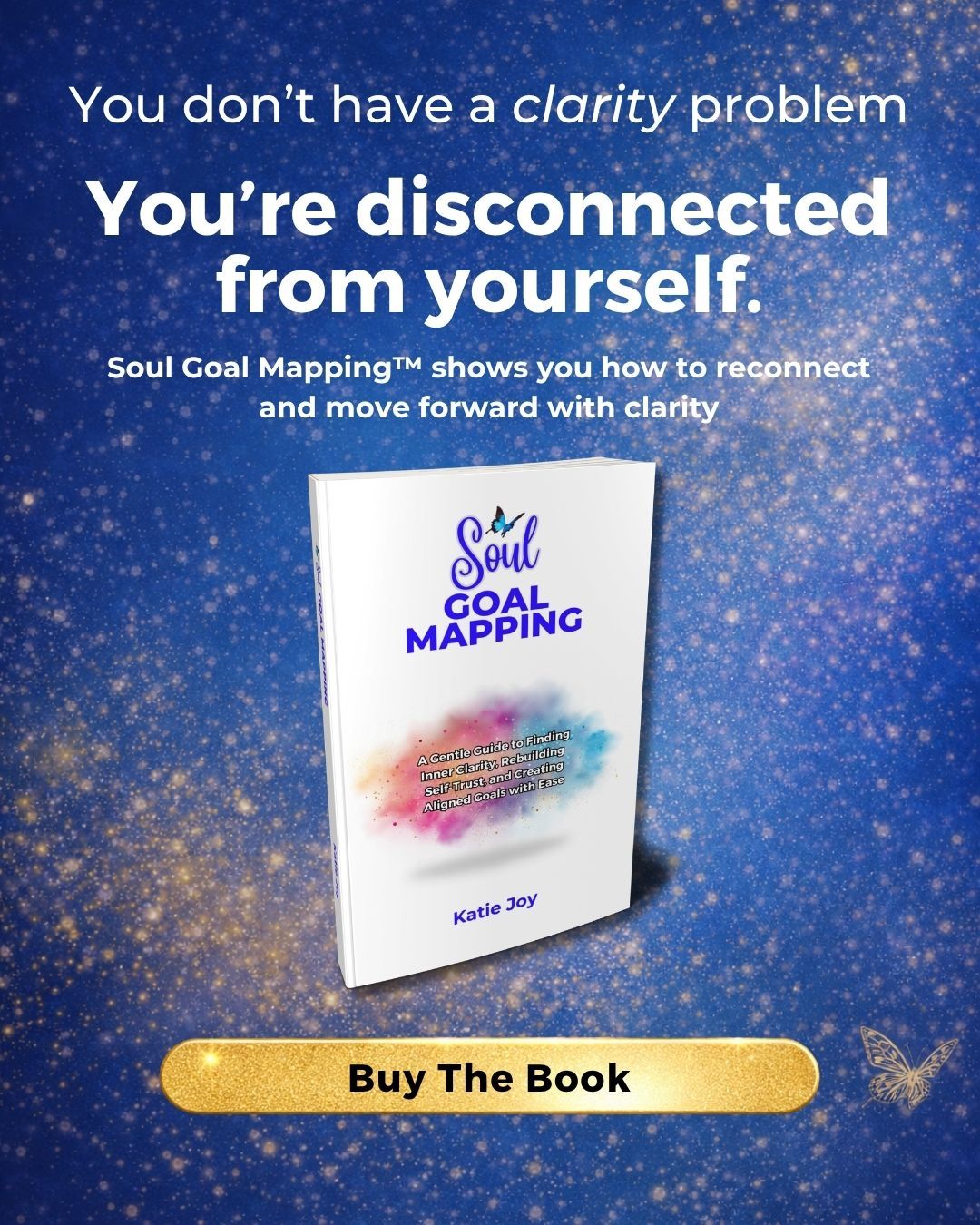
Because Soul Goal Mapping has never really been about handing you someone else’s map.
It is about helping your inner compass come back online.
It is about getting out of the hole and back into your soul, so you can fly.
Your Next Step: Come Back to Yourself Before You Charge Forward
If something in this article has made you recognise yourself, resist the temptation to turn that awareness into another enormous project.
Choose the next micro-step.
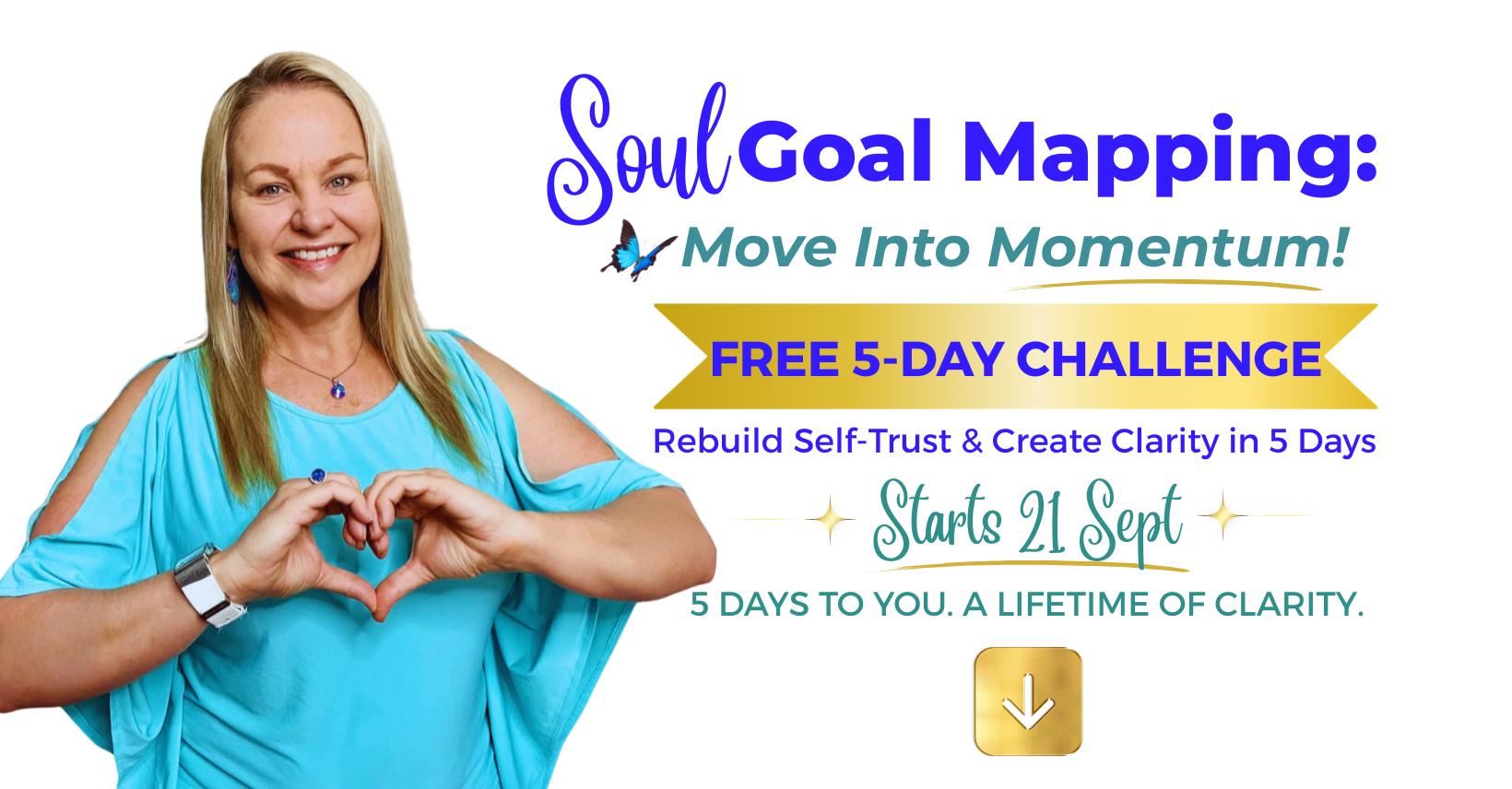
If you are ready to go deeper into your direction, reconnect with what genuinely matters to you and turn that internal clarity into aligned movement, join me for the next live Soul Goal Mapping Challenge.
This is exactly the territory we work with together: orientation, energy, self-trust, identity and activation. When enrolment is open, you’ll be able to join us directly. Between live rounds, you can add your name to the waitlist and I’ll let you know when the next Challenge opens.
If a live group experience feels like too big a step right now, the Mini Energetic Reset gives you a smaller private doorway. In around 30–40 minutes, you can experience the work for yourself, create some internal space, reconnect with your signal and identify the next small action available to you.
Either way, you do not have to solve your entire life today.
Come back to yourself.
Then take the next true step.