
Introduction
There are seasons in life where people quietly begin realising that the strategies which once helped them survive are no longer capable of carrying them into the next chapter of who they are becoming. Often, this awareness does not arrive dramatically. It arrives subtly through exhaustion that rest alone no longer fixes, through repeated emotional patterns that continue resurfacing despite years of self-awareness and personal growth work, through relationships that no longer feel emotionally sustainable, or through the growing recognition that information itself is no longer the problem.
Many highly capable adults eventually reach this point carrying enormous amounts of insight. They have read the books, attended the workshops, listened to the podcasts, explored healing modalities, consumed years of personal development content, and spent significant time trying to understand themselves intellectually. They often know exactly what they “should” do. They can articulate their patterns clearly. They understand the language of mindset, boundaries, trauma, nervous system regulation, relationships, spirituality, leadership, emotional intelligence, business, healing, and transformation. And yet, despite all of this awareness, many still find themselves caught in familiar cycles of overthinking, over-functioning, emotional exhaustion, burnout, procrastination, stop-start transformation, relationship patterns, visibility fears, self-doubt, or the quiet internal tension of knowing there is more available for their life while simultaneously feeling unable to consistently embody it.
This manuscript was written for those people.
Not because they are incapable. Not because they are lacking discipline. And certainly not because they need more pressure, shame, urgency, or self-criticism in order to finally transform. In many cases, highly capable people have already spent years trying to force themselves into change through effort, performance, hyper-responsibility, productivity, over-analysis, or emotional suppression. Often, these strategies worked temporarily because capability itself can mask nervous system exhaustion for quite a long time. But eventually, many people reach a stage where the body begins resisting the emotional cost of living disconnected from itself.
Over the years, both through my background in emergency paramedicine and through my work supporting people through identity recalibration, nervous system regulation, emotional resilience, and transformational coaching, I began recognising something important: people rarely build beyond what their nervous system believes is safe to hold.
Not sustainably, anyway.
This understanding changes the entire conversation around growth and transformation because human beings are not purely cognitive creatures. We are emotional, relational, physiological, behavioural, and deeply patterned beings. The nervous system does not automatically recalibrate simply because the conscious mind has reached a conclusion. A person can intellectually desire peace while remaining emotionally conditioned to chaos. They can consciously want visibility while their body still associates being seen with criticism, judgement, rejection, or emotional exposure. They can deeply crave healthy love while simultaneously carrying nervous system patterns rooted in self-protection, emotional inconsistency, abandonment, hyper-independence, or fear of losing themselves inside intimacy.
This creates enormous confusion for many highly capable adults because externally they may appear intelligent, functional, emotionally perceptive, successful, responsible, self-aware, and deeply capable. Internally, however, they are often carrying nervous systems shaped by years of emotional adaptation, conditioning, survival responses, inherited patterns, relational dynamics, over-responsibility, and identity structures that no longer fully align with the life they are trying to create now.
What many people judge harshly within themselves often makes far more sense when viewed through the lens of nervous system safety rather than self-criticism alone. Overthinking, procrastination, people pleasing, emotional withdrawal, perfectionism, fear of visibility, hyper-independence, difficulty resting, difficulty receiving support, chronic busyness, emotional shutdown, overworking, and stop-start transformation patterns are frequently not random failures of character. They are often intelligent protective adaptations created in response to previous emotional realities. The nervous system learns what feels safe, familiar, predictable, survivable, and emotionally manageable. Over time, those patterns become automated enough to feel like identity itself.
The goal of this manuscript is not to encourage endless self-analysis or to pathologise ordinary human struggle. It is to help make invisible patterns visible. It is to explore the relationship between nervous system conditioning, emotional familiarity, identity, survival adaptation, embodiment, and expansion. It is to examine why insight alone often fails to create lasting transformation and why many people continue recreating familiar emotional realities even while consciously desiring something different for their lives.
Most importantly, this manuscript is an invitation into a different relationship with transformation itself.
One rooted less in force and more in recalibration.
Because sustainable growth rarely happens through emotional violence towards yourself. It happens through gradually building enough awareness, support, self-trust, emotional honesty, nervous system safety, and embodied capacity that expansion no longer feels like constant threat. It happens through becoming conscious enough to recognise when old conditioning is speaking louder than present truth. It happens through learning how to remain connected to yourself while moving through uncertainty instead of immediately retreating back into familiar emotional territory.
This work is not about becoming perfect. It is not about eliminating fear, bypassing grief, or pretending uncertainty no longer exists. It is not about endlessly fixing yourself in pursuit of some future version of worthiness. It is about understanding that many people are not failing at transformation because they are incapable, but because they are trying to create a larger life from nervous systems still organised around survival.
And once this becomes visible, everything begins changing.
People stop interpreting every emotional reaction as proof they are weak, failing, or incapable. They stop assuming discomfort automatically means they are on the wrong path. They stop expecting themselves to leap into entirely new identities overnight without enough emotional integration or nervous system support. Instead, they begin recognising transformation for what it often truly is: a gradual process of recalibration. A process of becoming familiar with what once felt emotionally impossible. A process of safely expanding capacity until the nervous system no longer needs to defend so aggressively against visibility, rest, peace, intimacy, honesty, uncertainty, leadership, abundance, self-trust, and aligned expansion.
And over time, through enough awareness, repetition, integration, support, and lived experience, the life that once felt emotionally unsafe can slowly begin feeling survivable, sustainable, and eventually even natural.
That is the deeper invitation underneath this work.
Not to become somebody entirely different, but to become safe enough to fully embody who you were never meant to abandon in the first place.
A Note Before You Continue
This manuscript is not designed to be rushed through.
You do not need to consume every section in one sitting, underline every insight, or immediately transform your entire life after reading it.
Some parts may resonate immediately.
Other parts may surface slowly over time.
You may find yourself revisiting certain sections repeatedly as different layers of awareness, identity, and emotional capacity emerge throughout your own recalibration process.
That is intentional.
This is not simply a collection of ideas to intellectually understand.
It is an invitation to observe yourself differently.
To notice patterns more consciously.
To reflect more honestly.
And perhaps, to begin relating to your own nervous system, identity, growth, and expansion with greater compassion, awareness, and self-trust.
Take what resonates.
Pause when needed.
Return when ready.
Table of Contents
PART I — The Hidden Patterns Beneath Human Behaviour
1. Why Highly Capable People Stay Stuck
2. Your Nervous System Will Always Pull You Towards What Feels Familiar
3. The Identity Gap
PART II — The Nervous System and The Fear of Expansion
4. Problems Are Not Proof You’re On The Wrong Path
5. Emotional Homeostasis
6. Future Self Simulation
PART III — The Paramedic Principle
7. Simulations, Training, and Nervous System Conditioning
8. Stabilisation Before Expansion
9. The Role of Mentorship, Community, and Co-Regulation
PART IV — Identity Recalibration
10. You Do Not Become Your Future Self In One Leap
11. The Programmes Beneath Personality
12. The Invisible Becomes Visible
PART V — Safely Expanding Into A Bigger Life
13. Building Capacity For The Life You Desire
14. The Recalibration Effect
Closing Reflection
The Recalibration Effect™
The book edition is here 🦋
For the souls who love to hold the pages, highlight the moments that land, and return to the reminders they need most.
The Recalibration Effect™ is now available as a beautifully designed paperback and eBook.
Discover why highly capable people stay stuck — and how to safely expand into a bigger life through nervous system safety, identity recalibration, and deeper self-trust.
✨ eBook available for pre-order now
📖 Paperback available from 29 June 2026
Order Here
Opening Reflection
There comes a point in many people’s lives where they quietly realise that information is no longer the problem.
They have read the books. Listened to the podcasts. Attended the seminars. Filled journals with insights and intentions. They understand the language of healing, growth, boundaries, self-worth, purpose, nervous system regulation, manifestation, leadership, spirituality, relationships, business, trauma, and transformation. Intellectually, they often know exactly what they “should” do.
And yet, their life still feels caught in familiar loops.
Not always dramatically. Sometimes the patterns are subtle enough to almost rationalise away. A relationship they keep returning to despite knowing it no longer feels safe, reciprocal, or aligned. A business idea that lives permanently in notebooks and browser tabs but never fully enters the world. A vision for a different life that feels deeply true one moment, then strangely impossible the next. Cycles of expansion followed by retreat. Momentum followed by procrastination. Clarity followed by emotional exhaustion. A longing for change constantly negotiating with an invisible force pulling them back towards familiarity.
This is where many highly capable people become deeply confused about themselves.
Because from the outside, they often appear functional, intelligent, self-aware, responsible, insightful, and emotionally intelligent. They are frequently the person others turn to for guidance. They can hold space for everyone else. They can articulate complex emotional truths. They may even professionally help others transform their lives while privately wondering why certain parts of their own life still feel so difficult to fully shift.
Over the years, I have noticed that many people quietly begin blaming themselves at this point in the journey. They assume the issue must be discipline, mindset, laziness, fear, self-sabotage, lack of confidence, inconsistency, or some hidden flaw within them. So they push harder. Consume more information. Add more pressure. Set bigger goals. Attempt to force themselves into becoming the version of themselves they believe they are supposed to be.
But what if the issue is not a lack of intelligence, capability, or desire?
What if the deeper issue is that the nervous system does not yet feel safe holding the life the person consciously says they want?
That changes the entire conversation.
Because most people have never been taught that transformation is not simply cognitive. It is physiological. Emotional. Relational. Neurological. Energetic. Behavioural. Identity-based. The body does not automatically follow the mind just because the mind has reached a conclusion.
You can consciously desire peace while unconsciously remaining loyal to emotional chaos because it feels familiar. You can crave visibility while your nervous system associates visibility with judgement, rejection, criticism, or emotional danger. You can deeply want love, freedom, abundance, intimacy, creativity, leadership, or expansion while simultaneously experiencing an internal survival response every time life begins moving in that direction.
And when this happens, most people unknowingly interpret the discomfort of expansion as evidence they are moving the wrong way.
This is one of the greatest misunderstandings in personal growth.
The nervous system often interprets unfamiliarity before it interprets possibility.
So when someone begins stepping towards a larger life, the body may respond with anxiety, procrastination, exhaustion, confusion, overwhelm, avoidance, emotional shutdown, overthinking, hypervigilance, self-doubt, or the sudden urge to retreat back into what is known. Not necessarily because the vision is wrong, but because the internal systems responsible for safety, predictability, and survival have not yet recalibrated to the new reality.
Most people are trying to create external change without understanding the internal conditions required to safely sustain it.
This is why insight alone so often fails to create lasting transformation.
Awareness matters enormously. But awareness without integration can become another form of frustration. You can know exactly why you behave the way you do and still find yourself repeating the same patterns because understanding a pattern is not the same as creating enough safety within the body to move differently.
This is also why people frequently return to old relationships, old identities, old emotional environments, old coping mechanisms, old financial ceilings, old versions of themselves, and old ways of living, even after temporarily breaking away from them. The familiar often feels emotionally safer than the unknown, even when the familiar is painful.
For years, I watched this dynamic play out not only in personal development spaces, but long before that, during my training and career as a paramedic.
People often assume paramedics are trained primarily through theory. In reality, theory is only one layer. Before someone becomes capable of responding effectively under pressure, the nervous system must be gradually conditioned through repetition, simulation, mentorship, exposure, reflection, and practical experience. We did simulated emergency scenarios constantly. Car accidents. Multi-casualty events. Fires. Cardiac arrests. High-pressure situations involving multiple emergency teams all working together in real time.
The purpose was not merely to test knowledge. It was to reduce shock. To build familiarity. To help the nervous system learn how to function inside circumstances that would otherwise feel overwhelming.
You do not become calm in chaos by simply reading about calmness.
The body must experience itself surviving, adapting, responding, learning, recalibrating, and expanding capacity over time.
Transformation in life often works similarly.
Most people are attempting to leap psychologically into lives their nervous system has never practised feeling safe inside.
Then they judge themselves when fear appears.
But fear is not always a sign to turn back. Sometimes fear is simply the nervous system encountering unfamiliar territory before it has learned that the new environment is survivable.
This is why so many people remain trapped in cycles of stop-start transformation. They attempt radical change from an identity that has not yet expanded enough to safely hold the new reality. They try to force the future without building the emotional and nervous system foundations capable of sustaining it.
Real transformation is rarely about becoming someone entirely different overnight.
More often, it is a gradual process of expanding capacity.
A process of becoming familiar with what once felt impossible.
A process of stabilising inside new levels of visibility, love, peace, leadership, freedom, abundance, truth, responsibility, and self-trust.
A process of recalibration.
And perhaps most importantly, a process of learning that growth does not require self-abandonment.
You do not have to reject every previous version of yourself in order to expand beyond survival. Many of the patterns people judge within themselves were once intelligent adaptations. Protective strategies. Emotional survival responses. Ways of navigating environments where safety, belonging, love, certainty, or stability felt inconsistent or unavailable.
The goal is not to shame those parts of yourself.
The goal is to become conscious enough to lead them differently.
Because sustainable transformation does not happen through pressure alone.
It happens when the mind, body, emotions, identity, and nervous system gradually learn:
it is finally safe to move forward.
The Hidden Patterns Beneath Human Behaviour
1. Why Highly Capable People Stay Stuck
One of the most confusing experiences for highly capable people is realising that insight does not automatically translate into embodiment.
At first, this can feel deeply frustrating because capability has often been the very thing that allowed them to survive, adapt, achieve, and function throughout their life. These are usually people who know how to figure things out. People who learn quickly. People who are resourceful, emotionally aware, intelligent, responsible, and often highly perceptive of both themselves and others. They can hold complex conversations. They can recognise patterns. They can often explain exactly why they behave the way they do.
And yet, despite all of this awareness, there are often parts of their lives that remain stubbornly unchanged.
This is where many people begin developing a quiet shame around themselves that very few others ever see.
Because from the outside, their life may still appear relatively functional. They may still be working, parenting, leading, supporting others, paying bills, showing up professionally, and managing responsibilities. In many cases, they are the dependable one. The emotionally intelligent one. The helper. The leader. The coach. The person everyone else perceives as “having it together.”
But internally, they are often carrying an exhausting tension between who they consciously know themselves to be and the patterns they still cannot seem to fully shift.
That tension can quietly erode self-trust over time.
Not because the person lacks intelligence, but because repeated experiences of “knowing better” while still behaving differently can create a painful internal conflict. Eventually, people begin questioning themselves. Why do I keep doing this? Why can’t I follow through consistently? Why do I keep returning to situations that hurt me? Why do I procrastinate on the things that matter most to me? Why do I shrink myself after moments of expansion? Why does part of me want change so deeply while another part resists it so strongly?
Most traditional personal development approaches attempt to answer these questions through the lens of mindset, discipline, motivation, or behavioural strategy. While these things absolutely have value, they often fail to account for something far more foundational: the role of the nervous system in shaping behaviour, perception, emotional safety, and identity.
Because human beings are not purely cognitive creatures.
We are biological, emotional, relational, and patterned beings. Long before the conscious mind forms logical conclusions, the nervous system is constantly scanning the environment for cues of safety, danger, familiarity, unpredictability, acceptance, rejection, pressure, overwhelm, belonging, and emotional risk. Much of this happens automatically beneath conscious awareness.
This is why two people can intellectually want the exact same outcome while having completely different capacities to sustain movement towards it.
One person may experience visibility as exciting and expansive. Another may experience visibility as emotionally threatening because, somewhere in their history, being seen became associated with criticism, humiliation, pressure, conflict, punishment, or emotional exposure. One person may consciously desire a deeply loving relationship while another part of them unconsciously associates intimacy with instability, inconsistency, betrayal, emotional engulfment, abandonment, or loss of self. Someone may desperately want financial freedom while their nervous system still interprets wealth, responsibility, leadership, or success as dangerous because of the emotional experiences attached to those concepts throughout their life.
The conscious mind then becomes confused because it assumes desire alone should be enough.
But desire and safety are not always operating in alignment.
This is where highly capable people often become trapped in cycles of self-analysis. Because they can observe themselves so clearly, they frequently become even more frustrated by their inability to create lasting change. They read more books. Listen to more podcasts. Take more courses. Consume more information. They attempt to solve their patterns intellectually, believing that if they could just finally understand themselves enough, they would automatically change.
But information alone rarely recalibrates emotional familiarity.
This is one of the reasons people can spend years in therapy, healing work, coaching, or personal development while still finding themselves pulled back into familiar emotional realities. Awareness absolutely matters. Naming patterns matters. Understanding trauma matters. Emotional insight matters. But insight by itself does not necessarily create nervous system safety around behaving differently.
And this is where many people unknowingly become harsh with themselves.
They interpret their hesitation, procrastination, inconsistency, emotional overwhelm, fear, or avoidance as evidence that they are weak, failing, lazy, incapable, or somehow fundamentally flawed. In reality, many of these behaviours are often protective adaptations that were formed intelligently over time in response to environments, experiences, relationships, pressures, emotional injuries, or nervous system overload.
The problem is not that these adaptations once existed.
The problem is that many people are still unconsciously trying to build their future from identity structures that were originally designed for survival.
There is an enormous difference between surviving a life and safely expanding into one.
Survival prioritises predictability, familiarity, emotional protection, and immediate safety. Expansion requires capacity for uncertainty, visibility, vulnerability, responsibility, emotional exposure, change, and often the temporary discomfort of becoming unfamiliar to yourself while new parts of your identity stabilise.
That process can feel incredibly destabilising if someone has spent most of their life orientated around emotional survival rather than emotional safety.
This is why people often unconsciously retreat after periods of growth.
They start the business. Then freeze when it begins becoming visible. They leave the relationship. Then feel an overwhelming pull to reconnect once the loneliness, uncertainty, grief, or unfamiliarity emerges. They move towards a new life. Then suddenly feel exhausted, emotionally flooded, confused, or paralysed by practical decisions that previously felt exciting. They set larger goals, experience an initial surge of inspiration, then quietly retreat back towards familiar routines once the emotional reality of expansion begins activating deeper identity fears.
From the outside, this can appear irrational.
From a nervous system perspective, it often makes complete sense.
Because the nervous system is not always asking:
“What do I want?”
Often, it is first asking:
“What feels safe? What feels familiar? What have I emotionally survived before?”
And unless these deeper patterns become conscious, people can spend years unknowingly recreating emotional environments that reinforce old identities, even while consciously desiring entirely different lives.
This is also why transformation that is built purely on pressure rarely lasts.
Pressure can temporarily override patterns, particularly for highly capable people who are used to functioning through responsibility, performance, urgency, or hyper-independence. But eventually, most people reach a point where force stops working. The nervous system becomes exhausted. Emotional suppression catches up. Motivation fades. Burnout emerges. Old coping mechanisms resurface. The body begins demanding a different approach.
This is often the moment people mistakenly think they are failing.
In reality, many are simply arriving at the edge of what their current identity structure has the capacity to sustainably hold.
And that edge is not the end of transformation.
It is often the beginning of recalibration.
2. Your Nervous System Will Always Pull You Towards What Feels Familiar
One of the hardest truths for people to accept is that human beings do not automatically move towards what is healthiest, most aligned, or most expansive for them.
Very often, they move towards what feels familiar.
Even when that familiarity creates suffering.
Even when they consciously know better.
Even when they promised themselves they would never return there again.
This is one of the reasons people can leave relationships they know are unhealthy, only to find themselves pulled back months later once the emotional intensity settles and loneliness, uncertainty, grief, or self-doubt begins surfacing. It is why people leave jobs that are draining them emotionally, physically, or spiritually, only to later crave the stability, predictability, identity, routine, and familiarity those environments once provided. It is why people can experience moments of profound clarity about the life they want, then gradually drift back towards old habits, old emotional dynamics, old friendship groups, old coping mechanisms, old financial realities, or old ways of relating to themselves once the discomfort of change becomes sustained rather than exciting.
Most people assume this means they are weak or sabotaging themselves.
More often, it means their nervous system has not yet recalibrated to safely sustain the unfamiliar.
This is a very important distinction.
Because many people attempt to create external change without understanding that the body itself forms emotional attachments to familiar environments, identities, relational dynamics, and behavioural patterns over time. Even painful experiences can become psychologically and physiologically familiar when repeated long enough. The nervous system learns what to anticipate. It learns how to navigate those environments. It develops prediction patterns around them. In many cases, familiar discomfort begins feeling safer than unfamiliar peace simply because the body knows how to function inside it.
This is why people sometimes feel strangely uncomfortable when life finally becomes calm.
They may consciously want peace, healthy love, stability, consistency, visibility, abundance, or emotional safety, yet when those experiences begin arriving, another part of them becomes restless, hypervigilant, emotionally detached, suspicious, overwhelmed, numb, or subconsciously drawn towards recreating chaos again.
Not because they consciously enjoy suffering.
But because the nervous system often equates familiarity with safety.
For many people, especially those who spent years adapting to emotionally inconsistent environments, stress itself can become normalised. Hyper-independence can feel safer than vulnerability. Emotional self-protection can feel safer than intimacy. Overworking can feel safer than rest. Overthinking can feel safer than trust. Staying emotionally small can feel safer than visibility. Constant busyness can feel safer than stillness because stillness finally allows unresolved emotions to surface.
This is why transformation work must go far deeper than surface-level behaviour change.
You cannot sustainably create a different life while unconsciously remaining emotionally loyal to the identity structures built around your previous survival patterns.
And this loyalty is often far more unconscious than people realise.
Many people genuinely believe they are trying to move forward while unknowingly recreating environments that reinforce old emotional realities. Sometimes this happens through relationships. Sometimes through financial decisions. Sometimes through self-talk. Sometimes through work dynamics. Sometimes through avoidance. Sometimes through overcommitment. Sometimes through repeatedly choosing people, situations, or environments that mirror familiar emotional experiences from earlier chapters of life.
The pattern itself is often invisible until someone slows down enough to observe it clearly.
This is one of the reasons self-awareness can initially feel uncomfortable. Once people begin recognising how often they have recreated familiarity rather than consciously chosen alignment, they can temporarily become quite hard on themselves. But shame is rarely what creates sustainable change. In fact, shame often strengthens the very nervous system responses people are trying to move beyond.
Awareness without compassion tends to create inner conflict.
Awareness with honesty and self-responsibility creates the possibility for recalibration.
Because once someone can begin observing their patterns without immediately collapsing into judgement, something powerful starts happening. They begin separating who they are from the unconscious programmes, emotional conditioning, survival adaptations, and nervous system responses that have been quietly driving many of their behaviours.
That separation is incredibly important.
Without it, people often over-identify with their patterns. They say things like:
“This is just who I am.”
“I’ve always been like this.”
“I always ruin things.”
“I can never follow through.”
“I’m just an anxious person.”
“I always choose the wrong people.”
“I’m not capable of consistency.”
“I’m just bad with money.”
“I’m not someone who succeeds.”
Over time, repeated emotional experiences become fused with identity.
The nervous system then begins protecting the identity itself because identity provides familiarity, and familiarity creates predictability. Even identities built around struggle can become emotionally stabilising if they have existed long enough.
This is one of the reasons genuine transformation often feels disorientating before it feels freeing.
People are not simply changing behaviours. They are renegotiating emotional familiarity. They are teaching the nervous system that new experiences, new levels of visibility, new standards, new boundaries, new relationships, new ways of living, and new versions of themselves can become safe too.
That process rarely happens instantly.
It happens gradually through repeated experiences of surviving expansion without abandoning yourself in the process.
This is also why forcing dramatic overnight reinvention often backfires.
Many people become inspired by visions of a radically different future and attempt to leap psychologically far beyond their current nervous system capacity. They pressure themselves to become a completely different person immediately. They attempt to eliminate every old habit at once. They cut off parts of themselves harshly. They create unrealistic expectations around consistency, healing, productivity, spirituality, business success, relationships, or emotional mastery. Then, when their nervous system inevitably becomes overwhelmed, they interpret the discomfort as failure rather than feedback.
But sustainable expansion rarely comes through emotional violence towards yourself.
It comes through gradually building safety within the unfamiliar.
It comes through learning how to remain present with discomfort long enough for the nervous system to discover:
“I can survive this.”
“I can adapt here.”
“I can stabilise here.”
“I do not need to retreat every time life becomes unfamiliar.”
This is where many people begin experiencing a completely different relationship with growth.
Instead of seeing fear, discomfort, uncertainty, or emotional activation as evidence they are moving the wrong direction, they begin recognising these experiences as natural parts of identity expansion. Not every fear should be ignored, of course. Discernment matters deeply. But many people have spent years allowing emotional discomfort alone to determine the direction of their lives.
And emotional discomfort is not always danger.
Sometimes it is simply unfamiliarity.
Sometimes it is the nervous system adjusting to a larger life than the one it previously believed was possible.
That distinction changes everything.
3. The Identity Gap
There is often a hidden period in people’s lives that very few others ever fully see.
It is the space between no longer being who you once were, yet not fully feeling stabilised inside who you are becoming.
That space can feel deeply uncomfortable.
Confusing, even.
Because externally, life may appear relatively normal while internally, an entire identity structure is quietly reorganising itself beneath the surface. Old ways of thinking begin losing their grip. Certain relationships stop fitting naturally. Conversations that once felt energising start feeling emotionally draining. Environments that were once tolerable begin feeling heavy on the nervous system. Goals that previously drove you no longer hold the same emotional charge. Parts of your old identity begin falling away before the new version of yourself feels fully anchored.
This is the stage where many people begin questioning themselves unnecessarily.
They assume they are lost.
In reality, they are often in transition.
The difficulty is that most people have never been taught how disorientating identity expansion can feel while it is happening in real time. We tend to romanticise transformation after it has already stabilised. We celebrate the outcome. The success story. The healed relationship. The thriving business. The relocation. The confidence. The reinvention. The visible result.
But very few people openly talk about the strange in-between space where your old identity no longer fully fits, yet your nervous system still does not entirely trust the new one.
That is where many people retreat.
Not because they are incapable of growth, but because uncertainty itself can feel emotionally unsafe when the nervous system has spent years orientated around predictability, approval, performance, emotional protection, or familiar survival dynamics.
This is why identity work is so much deeper than simply “deciding who you want to become.”
Many people intellectually choose a future version of themselves while unconsciously remaining emotionally loyal to the identity structures that once kept them psychologically safe.
For example, someone may consciously desire greater visibility in their business while still carrying unconscious associations between visibility and judgement. Someone may deeply desire healthy love while still operating from an identity shaped around abandonment, emotional inconsistency, or self-protection. Someone may crave freedom while simultaneously feeling terrified of uncertainty because their nervous system has learned to associate control with safety. Someone may want to become financially abundant while still carrying inherited emotional patterns around scarcity, guilt, responsibility, overworking, or fear of being rejected if they become more successful than those around them.
The conscious vision and the unconscious identity can often be moving in completely different directions.
This creates what I often think of as the identity gap.
The identity gap is the emotional and nervous system distance between the life someone consciously desires and the level of internal safety they currently feel in relation to living it.
Most people try to close this gap through pressure.
Through forcing.
Through urgency.
Through self-criticism.
Through pushing themselves harder every time they fail to follow through consistently.
But pressure alone rarely creates safe embodiment.
In fact, for many highly capable people, pressure is often the very strategy that has already exhausted their nervous system for years.
Many people learned early in life that achievement created approval. Performance created safety. Being responsible reduced chaos. Over-functioning reduced conflict. Anticipating the needs of others created belonging. Being productive created self-worth. Staying emotionally small reduced risk. Hyper-independence prevented disappointment.
Over time, these strategies can become deeply fused with identity.
The person no longer simply behaves responsibly. They become “the responsible one.”
They no longer simply overthink occasionally. They become “the anxious one.”
They no longer simply help others. They become “the helper.”
They no longer simply adapt. They become someone who unconsciously shapeshifts in order to maintain emotional safety inside relationships and environments.
This is why identity recalibration requires far more than surface-level behavioural change.
Because many behaviours are not random.
They are organised around maintaining emotional familiarity and preserving identity coherence.
Even when the identity itself creates suffering.
Human beings have a deep psychological need for internal consistency. The nervous system generally prefers a familiar identity over an unfamiliar one, even if the familiar identity is limiting. This is one of the reasons people often unconsciously recreate circumstances that reinforce existing beliefs about themselves and the world.
If someone unconsciously believes:
“I always get left.”
“I have to do everything alone.”
“People cannot be trusted.”
“Success creates pressure.”
“Rest is unsafe.”
“I am only valuable when I am productive.”
“I always lose momentum.”
“I am too much.”
“I am not enough.”
…their nervous system will often filter reality through those existing identity structures until those patterns become conscious and recalibrated.
This is also why true transformation can initially feel emotionally destabilising rather than immediately empowering.
Because changing your life often requires becoming temporarily unfamiliar to yourself.
That can feel deeply vulnerable.
Especially for people who have spent years trying to create emotional safety through certainty, control, predictability, approval, or performance.
There is a grief that can emerge during identity expansion too, although many people do not recognise it immediately. Sometimes people are not only grieving relationships, jobs, environments, or previous versions of their life. Sometimes they are grieving identities they spent years building in order to survive emotionally.
The high achiever.
The rescuer.
The hyper-independent one.
The emotionally available one who abandoned themselves trying to hold everyone else together.
The endlessly responsible one.
The one who never rested.
The one who stayed small to avoid conflict.
The one who became who others needed them to be.
When these identities begin loosening, people can temporarily feel untethered because the nervous system has not yet learned who they are without those familiar roles.
This is why compassion matters so deeply during transformation.
Not passive avoidance. Not self-excusing. But compassionate awareness.
Because harshness often reinforces the very nervous system states people are trying to move beyond.
Real recalibration requires enough safety for honesty to exist without emotional collapse.
And this is where the process becomes far more powerful.
Because once people begin separating their core self from the survival identities they adapted into, they gradually create space for something new to emerge. They stop asking:
“What is wrong with me?”
And begin asking:
“What experiences shaped this pattern?”
“What did this identity once protect me from?”
“What emotional reality did this version of me help me survive?”
“What would safety look like now?”
“What would change if I no longer needed this pattern for protection?”
These questions create a very different relationship with transformation.
One rooted less in force, and more in understanding.
Less in performance, and more in integration.
Less in abandoning old versions of yourself, and more in consciously leading yourself beyond the identities that were built around survival alone.
Because lasting transformation is rarely about becoming somebody else entirely.
More often, it is about becoming safe enough to fully become yourself.
The Nervous System and The Fear of Expansion
4. Problems Are Not Proof You’re On The Wrong Path
One of the biggest reasons people abandon meaningful change is because they misunderstand what discomfort actually means.
Most people have been conditioned to believe that if something is truly aligned, meant for them, or “right,” it should feel naturally easy, peaceful, and effortless from the beginning. So when fear, uncertainty, resistance, overwhelm, confusion, exhaustion, emotional activation, or practical problems begin appearing after they make a significant decision, they often interpret those experiences as evidence they should turn back.
The relationship becomes challenging, so they assume they chose the wrong person.
The business becomes visible, so they retreat because the pressure suddenly feels uncomfortable.
The move overseas becomes real, and practical fears begin surfacing, so they convince themselves the dream was unrealistic.
They start setting boundaries and suddenly feel guilt, loneliness, or rejection, so they collapse back into old relational dynamics to relieve the discomfort.
The pattern is incredibly common.
People frequently expect expansion to feel emotionally comfortable before their nervous system has had enough time to recalibrate to the new reality.
But discomfort is not always misalignment.
Sometimes discomfort is simply the emotional experience of leaving familiarity behind before your body fully trusts what comes next.
This distinction changes everything.
Because when people interpret every challenge as a sign to retreat, they unknowingly train their nervous system to associate unfamiliarity with danger. The moment discomfort appears, they move backwards towards emotional predictability. The nervous system receives reinforcement that retreat equals safety, while expansion equals overwhelm.
Over time, this creates a life built around avoiding activation rather than consciously expanding capacity.
And yet, almost every meaningful transition in life involves a period where things feel uncertain before they feel stable.
This is true in relationships.
It is true in business.
It is true in parenting.
It is true in leadership.
It is true in healing.
It is true in relocation.
It is true in creating an entirely different life.
There is often a phase where the old identity no longer fully fits, while the new reality still feels emotionally unfamiliar. During that in-between space, the nervous system frequently interprets uncertainty before it experiences freedom.
That is why many people unconsciously sabotage themselves just as life begins opening.
Not because they consciously want failure, but because expansion activates everything within them that does not yet feel safe holding the next level.
This is where I often see highly capable people become particularly hard on themselves.
Because intellectually, they can future pace the vision. They can see the possibility. They can often make intelligent strategic decisions. But once the emotional reality of the transition begins arriving, the nervous system starts surfacing all the unresolved fears, patterns, and protective adaptations connected to uncertainty, visibility, change, loss, judgement, responsibility, or emotional exposure.
The body then responds as if something dangerous is happening.
And because many people were never taught how to interpret these responses accurately, they assume:
“This means I’m failing.”
“This means I made the wrong decision.”
“This means I’m not ready.”
“This means I should go back.”
But growth often feels destabilising before it feels natural.
This is something I wish more people understood.
Particularly because modern personal development culture often unintentionally creates unrealistic expectations around transformation. People are shown the final chapter of someone’s reinvention story without seeing the nervous system recalibration that happened underneath it. They see the thriving business, healthy relationship, relocation, freedom, confidence, visibility, success, or peace without understanding how many moments of uncertainty, emotional discomfort, practical problem-solving, and identity expansion were required to stabilise there.
As a result, many people quietly believe they are uniquely struggling when challenges arise.
In reality, problems are often part of the recalibration process itself.
Not all problems, of course. Discernment matters deeply. Some situations genuinely are unsafe, misaligned, or harmful. But many of the challenges people encounter during growth are not evidence they should abandon the path. They are invitations to expand the internal capacity required to sustain it.
That is a very different relationship with difficulty.
Instead of asking:
“How do I avoid all problems?”
The question becomes:
“What version of myself is this challenge asking me to become?”
That question changes the nervous system response entirely.
Because now the problem is no longer interpreted solely as threat. It becomes information. A mirror. A training ground. A signal revealing where further stabilisation, support, skill-building, emotional processing, boundaries, leadership, trust, flexibility, or identity expansion are required.
This is something emergency medicine taught me very early in life.
As paramedics, we did not wait until a catastrophic situation occurred before learning how to respond. We trained repeatedly before real emergencies happened. We practised scenarios. We rehearsed protocols. We simulated high-pressure environments. We learned how to regulate ourselves while thinking clearly under stress. We made mistakes inside training environments so that our nervous system gradually became more capable of functioning in real-life situations.
The purpose of simulation training was not perfection.
It was familiarisation.
The nervous system performs differently inside circumstances it has mentally and emotionally rehearsed before.
This is why future pacing can be such a powerful tool when used consciously.
Most people future pace unconsciously through fear. They imagine worst-case scenarios, emotionally react to them as though they are already happening, then retreat before taking action at all. The nervous system experiences the imagined situation as evidence of danger rather than possibility.
But there is another way to engage the imagination.
Instead of using future thinking purely to catastrophise, people can begin using it to build nervous system familiarity around resilience, adaptability, resourcefulness, support, and problem-solving.
Not through fantasy.
Through conscious simulation.
“What if this challenge did happen?”
“What would I actually do?”
“Who would I need support from?”
“What resources would I need?”
“What skills would I develop?”
“How would the future version of me respond?”
“What would stabilising through this look like?”
These kinds of questions are incredibly powerful because they interrupt helplessness.
They shift the nervous system from panic into possibility.
The goal is not to eliminate uncertainty from life.
That is impossible.
The goal is to gradually increase your capacity to remain present, resourced, and conscious while moving through uncertainty.
Because this is where real self-trust is built.
Not by avoiding every difficult experience, but by repeatedly discovering that you are capable of meeting life more powerfully than your old identity once believed.
This is one of the reasons growth often accelerates after people stop treating discomfort as an automatic sign to retreat.
Instead of collapsing every time fear appears, they begin becoming curious about what the fear is protecting. They begin observing where old emotional conditioning is surfacing. They begin recognising that unfamiliarity is not always danger. They begin building relationships with challenge differently.
Not as punishment.
Not as proof they are failing.
But as part of the process of safely expanding beyond the limits of their previous identity structures.
And over time, something remarkable starts happening.
The things that once felt overwhelming begin feeling manageable.
The conversations that once felt terrifying become doable.
The boundaries that once triggered guilt become natural.
The visibility that once activated fear becomes familiar.
The life that once felt impossible slowly becomes normalised.
Not because the person forced themselves aggressively into transformation, but because their nervous system gradually learned:
“I can survive expansion.”
“I can stabilise here too.”
“I no longer need to retreat every time life grows larger than my previous comfort zone.”
5. Emotional Homeostasis
Most people understand the concept of physical homeostasis. The body constantly works to maintain internal balance. Temperature, blood pressure, hydration, oxygen levels, blood sugar, heart rate — countless systems are continuously adjusting beneath conscious awareness in order to keep the body functioning within familiar and survivable ranges.
What many people do not realise is that human beings also develop forms of emotional homeostasis.
Over time, the nervous system becomes conditioned not only to certain behaviours and environments, but to certain emotional states. Familiar emotional experiences begin forming an internal baseline that the body unconsciously learns to expect, anticipate, and regulate around.
This is one of the reasons people can unknowingly recreate emotional patterns throughout their lives even when they consciously desire something completely different.
Someone who grew up around unpredictability may later find calmness strangely uncomfortable. Someone who learned to associate love with inconsistency may unconsciously feel more emotionally activated around unavailable partners than emotionally safe ones. Someone who spent years surviving through urgency and pressure may struggle to rest without guilt because their nervous system has normalised stress as productivity and stillness as unsafe. Someone who became emotionally conditioned to proving their worth through achievement may feel deeply unsettled during seasons where external performance slows down.
The body becomes familiar with certain emotional chemicals, relational dynamics, behavioural rhythms, and internal states.
Familiarity then starts masquerading as identity.
This is where emotional homeostasis quietly shapes enormous portions of people’s lives.
Because when the nervous system becomes accustomed to a particular emotional baseline, it will often unconsciously attempt to return to that baseline even after periods of growth, healing, success, peace, or expansion.
Not because people consciously want to suffer.
But because the body seeks familiarity before it seeks possibility.
This can feel incredibly confusing when someone begins genuinely changing their life.
At first, the new relationship feels beautiful, but eventually the nervous system starts searching for signs of danger because calmness feels unfamiliar. A person finally experiences spaciousness after years of overworking, only to unconsciously fill their life with new responsibilities because busyness feels emotionally safer than stillness. Someone reaches a long-desired financial milestone, then unexpectedly experiences anxiety, self-sabotage, avoidance, overspending, emotional shutdown, or exhaustion because their nervous system has not yet recalibrated to safely hold that level of abundance or responsibility.
This is why people often assume they are “self-sabotaging” when in reality their nervous system is attempting to restore emotional familiarity.
The body is trying to return to what it knows.
And unless this process becomes conscious, people can spend years recreating emotional environments that reinforce old identity structures without understanding why they keep returning there.
This is particularly common among highly capable people because capability can become an adaptation itself.
Many highly capable adults learned very early how to function under pressure. They became responsible, hyper-aware, emotionally perceptive, self-reliant, productive, accommodating, or high-performing because those behaviours helped them navigate environments where emotional safety, stability, approval, or predictability felt uncertain.
Over time, these patterns become deeply normalised.
The nervous system begins associating stress with purpose.
Over-functioning with value.
Anticipation with safety.
Self-sacrifice with love.
Hypervigilance with responsibility.
Control with survival.
And because these patterns are often socially rewarded, many people do not initially recognise the emotional cost of living this way.
In fact, they may build entire identities around being the dependable one. The capable one. The resilient one. The helper. The achiever. The strong one who can hold everything together.
Until eventually, the nervous system becomes exhausted from maintaining an emotional baseline that was built around adaptation rather than genuine safety.
This is often the point where people begin seeking deeper transformation work.
Not because their life has necessarily collapsed externally, but because internally they can no longer sustain the level of emotional effort required to maintain their current identity structures. The body starts asking for recalibration long before the conscious mind fully understands what is happening.
And this is where emotional homeostasis becomes such an important concept.
Because people cannot sustainably change what they are unwilling to become conscious of.
If someone unconsciously equates chaos with aliveness, they may repeatedly create relational instability even while consciously craving peace. If someone associates exhaustion with achievement, they may struggle to rest without feeling unproductive or unsafe. If someone has spent years emotionally adapted to disappointment, they may unconsciously lower expectations, avoid visibility, procrastinate, or retreat from opportunities before life has the chance to exceed the emotional limitations they have normalised internally.
This is why transformation often requires far more than changing external circumstances.
You can move countries and still carry the same emotional baseline.
You can leave the relationship and still recreate similar dynamics elsewhere.
You can change careers and still remain trapped in the same patterns of overworking, self-abandonment, people-pleasing, emotional suppression, or hyper-responsibility.
External change without internal recalibration often creates temporary relief rather than lasting transformation.
Eventually, the nervous system starts attempting to restore emotional familiarity again.
This is one of the reasons many people unconsciously drift back towards previous versions of themselves after periods of growth. Not because growth was fake, but because the new emotional reality had not yet become stabilised enough to feel safe and sustainable inside the body.
And this is where patience becomes incredibly important.
Real recalibration takes repetition.
The nervous system learns through lived experience, not intellectual pressure alone.
People often want immediate emotional certainty before allowing themselves to move forward. They want to feel completely confident before making the decision. Completely healed before entering the relationship. Completely fearless before becoming visible. Completely secure before changing careers. Completely ready before expanding into a larger life.
But emotional safety is often built through gradual exposure, integration, support, reflection, and repeated experiences of surviving the unfamiliar without collapsing back into old emotional baselines.
This is why sustainable transformation usually looks less dramatic than people imagine.
It often happens quietly.
Through repeated moments of responding differently.
Through staying present during discomfort rather than immediately escaping it.
Through tolerating unfamiliar peace long enough for the body to stop interpreting calmness as suspicious.
Through allowing rest without earning it.
Through setting boundaries without immediately abandoning yourself to guilt.
Through remaining connected to your vision even when uncertainty appears.
Through learning that you can experience fear without automatically obeying it.
And slowly, over time, the nervous system begins establishing a new emotional baseline.
Peace becomes more familiar.
Self-trust becomes more familiar.
Visibility becomes more familiar.
Healthy love becomes more familiar.
Spaciousness becomes more familiar.
Rest becomes more familiar.
Expansion becomes more familiar.
The life that once felt emotionally unsafe gradually becomes a life the body no longer needs to defend against.
This is the deeper work of recalibration.
Not forcing yourself into becoming somebody else, but teaching your nervous system that it is finally safe to stop organising your life around survival alone.
6. Future Self Simulation
Most people spend far more time rehearsing fear than they do rehearsing possibility.
They imagine everything that could go wrong. Every mistake they could make. Every worst-case scenario. Every possible humiliation, failure, rejection, loss, disappointment, or disaster. Then, because the nervous system responds to imagined experiences as though they carry emotional reality, the body begins reacting before anything has even happened.
The heart rate changes.
The stomach tightens.
The nervous system activates.
The mind begins scanning for danger.
And before long, the person retreats back towards familiarity, often convincing themselves they are simply being “realistic.”
But there is a significant difference between grounded discernment and unconscious fear rehearsal.
One creates preparation.
The other creates paralysis.
This is where future self simulation becomes incredibly powerful.
Not as fantasy.
Not as delusion.
Not as bypassing reality or pretending life will unfold perfectly.
But as conscious nervous system familiarisation.
One of the things I learned very early during my paramedic training was that the human nervous system responds differently to situations it has mentally and emotionally rehearsed before. This is one of the reasons emergency services use simulation training so extensively. We did not simply sit in classrooms memorising theory and then suddenly arrive at catastrophic situations expecting the body to function calmly under pressure. We repeatedly practised scenarios in controlled environments so that the nervous system could gradually build familiarity with stress, unpredictability, rapid decision-making, emotional regulation, teamwork, leadership, and adaptability.
The goal was never to eliminate uncertainty completely.
That would be impossible.
The goal was to reduce shock.
To build response capacity.
To strengthen the ability to remain functional, resourced, and conscious while navigating emotionally intense situations.
That principle applies to life far more than most people realise.
Because many people are unknowingly attempting to create futures their nervous system has never practised feeling safe inside.
Then they judge themselves when fear appears.
Someone dreams of creating a successful business, but every time they begin becoming visible, the nervous system floods with fear because visibility has never been emotionally familiar. Someone desires healthy love, but the moment intimacy deepens, the body starts searching for danger because consistent emotional safety feels unfamiliar compared to previous relationship patterns. Someone imagines moving overseas, changing careers, leading publicly, earning significantly more money, setting stronger boundaries, or building a radically different life, yet the nervous system immediately begins generating catastrophic scenarios because uncertainty itself has become associated with threat.
The body responds as though expansion equals danger.
This is why so many people remain trapped between vision and embodiment.
They can imagine the future intellectually, but they have not yet built enough nervous system familiarity to remain regulated while moving towards it.
And this is where many people unknowingly use imagination against themselves.
The imagination itself is not the problem.
It is one of the most powerful tools human beings possess.
The issue is that most people primarily use it to rehearse collapse.
They mentally simulate failure repeatedly while rarely consciously simulating resilience, adaptability, support, leadership, emotional regulation, or their own ability to navigate challenge successfully.
As a result, the nervous system becomes highly practised at anticipating danger while remaining unfamiliar with safety inside expansion.
Future self simulation changes this dynamic entirely.
Because instead of only asking:
“What if everything goes wrong?”
…people begin consciously exploring:
“What if I could handle more than I currently believe?”
“What would the future version of me do here?”
“How would I respond if this challenge actually happened?”
“What support systems would I create?”
“What resources would I access?”
“What skills would I develop?”
“What would stabilising through this look like?”
“What kind of person would I need to become to safely hold this vision?”
These kinds of questions shift the nervous system from helplessness into engagement.
The future no longer exists purely as an overwhelming unknown. It begins becoming psychologically navigable.
This is incredibly important because uncertainty itself is often what overwhelms people most.
The nervous system struggles far more with perceived unpredictability than with challenge alone.
When people consciously begin exploring possible scenarios without emotionally collapsing into them, something fascinating starts happening. The body gradually learns:
“I can think about this without panicking.”
“I can prepare without catastrophising.”
“I can imagine challenge without automatically retreating.”
“I can become more resourceful than I previously believed.”
That creates expansion.
Not because fear disappears, but because capacity increases.
This is also why many highly capable people benefit enormously from future pacing exercises when done properly. Not in a superficial “vision board only” way, but through genuine emotional and practical simulation.
What would daily life actually look like?
What practical problems would emerge?
What emotional patterns would likely activate?
What support would be required?
What routines, boundaries, conversations, systems, environments, or relationships would help stabilise this next chapter?
Most people avoid these questions because they mistakenly believe acknowledging potential problems will make them more likely to happen.
In reality, conscious preparation often reduces nervous system fear because uncertainty becomes less abstract.
The unknown starts becoming workable.
This is something people naturally do in many practical areas of life already. Parents prepare for having children long before they fully know what parenting will feel like. Athletes mentally rehearse competition before stepping into performance environments. Pilots train repeatedly for emergency situations they hope never happen. Surgeons practise procedures extensively before operating independently. Emergency services simulate disasters before responding to them in real life.
Yet when it comes to emotional expansion, identity change, relationships, business growth, visibility, leadership, relocation, or creating an entirely different life, many people expect themselves to leap psychologically into unfamiliar realities without any form of nervous system preparation at all.
Then they interpret fear as failure.
But fear often decreases when familiarity increases.
And familiarity can be built intentionally.
This is one of the reasons coaching, mentorship, and safe community environments can become so transformative. When people are surrounded by others navigating similar growth, the nervous system begins receiving evidence that expansion is survivable. The invisible becomes visible. What once felt uniquely terrifying becomes normalised through shared experience, guidance, modelling, support, and co-regulation.
People begin realising:
“I am not the only person who feels this way.”
“This reaction makes sense.”
“Growth does not require perfection.”
“I can move forward while still feeling uncertain.”
“I do not need to wait until fear disappears completely before taking aligned action.”
This is where the future gradually starts feeling less like fantasy and more like reality.
Not because someone magically transformed overnight, but because the nervous system slowly became more familiar with the identity, emotional state, and practical realities required to hold the next chapter safely.
And this is an important distinction:
future self simulation is not about becoming disconnected from the present moment.
It is about expanding your relationship with what feels possible.
It is about helping the body stop interpreting every unfamiliar experience as immediate danger.
It is about gradually teaching yourself:
“I can meet life differently now.”
“I can build capacity.”
“I can stabilise inside expansion.”
“I do not need to retreat every time my future becomes larger than my past.”
The Paramedic Principle
7. Simulations, Training, and Nervous System Conditioning
Long before I began working in personal transformation, identity recalibration, and emotional regulation, I was trained as a paramedic. And although at the time I did not fully realise how profoundly that experience would shape the way I understood human behaviour, nervous system responses, and transformation itself, I can now see that many of the deepest principles I teach today were already being demonstrated there years earlier.
Because emergency medicine teaches you very quickly that knowledge alone is not enough.
A person can intellectually understand protocols, procedures, anatomy, medications, communication models, and emergency response theory, but when real pressure arrives, the nervous system becomes part of the equation. The body responds. Adrenaline activates. Stress hormones surge. The environment becomes unpredictable. Human emotion enters the situation. Families panic. Patients deteriorate. Variables shift rapidly. Decisions need to be made under pressure.
And this is where training matters enormously.
Not just theoretical training.
Conditioning.
Repetition.
Simulation.
Exposure.
Mentorship.
Gradual nervous system familiarisation.
One of the reasons emergency services spend so much time running simulation exercises is because the body performs differently inside circumstances it has previously rehearsed. We trained repeatedly in controlled environments before being expected to handle real-life emergencies independently. Car accidents. Cardiac arrests. Trauma scenarios. Multi-casualty incidents. Fires. High-pressure situations involving multiple emergency services working simultaneously.
The purpose was never to create fear.
It was to reduce shock.
To help the nervous system gradually become more capable of functioning under pressure without immediately collapsing into panic, paralysis, overwhelm, or disorganisation.
And the important thing is this:
nobody expected perfection immediately.
You were not simply handed responsibility and expected to magically regulate yourself through every situation from day one. There was a process. Experienced paramedics guided newer ones. You learned in stages. You built capacity progressively. You observed others first. You practised repeatedly. You made mistakes inside supported environments. You expanded your confidence through lived experience rather than through pressure alone.
The nervous system was being conditioned through repetition and exposure.
This is one of the reasons I often find it fascinating that people expect themselves to navigate major life transitions without any equivalent process of emotional preparation or support.
Someone decides to leave a long-term relationship, build a business, become visible online, relocate countries, heal old relational patterns, increase their income significantly, become a parent, create healthier boundaries, step into leadership, or completely redesign their life, and they expect themselves to immediately feel emotionally stable throughout the process.
Then, when fear, uncertainty, emotional activation, procrastination, overwhelm, exhaustion, or self-doubt appear, they interpret those responses as proof they are incapable or making the wrong decision.
But from a nervous system perspective, many of these reactions are completely understandable.
The body is encountering unfamiliar territory.
And unfamiliarity often activates survival responses before it activates confidence.
This is where I believe many people become unnecessarily harsh with themselves.
Because they expect embodiment before conditioning.
They expect certainty before stabilisation.
They expect confidence before repetition.
But confidence is often the result of survived experience, not the prerequisite for it.
Most people do not become emotionally regulated by waiting until life feels easy.
They become more regulated through gradually expanding their capacity to remain present while navigating experiences that once felt overwhelming.
This is exactly what simulation training does.
It creates controlled exposure to previously activating circumstances until the nervous system begins learning:
“I can survive this.”
“I can think clearly here.”
“I can function here.”
“I can stabilise here too.”
That process matters enormously in personal transformation.
Because many people are trying to leap into future realities their nervous system still perceives as emotionally dangerous.
Not because those realities are objectively unsafe, but because they represent:
- uncertainty
- visibility
- responsibility
- change
- emotional exposure
- unfamiliar identity
- or loss of previous emotional predictability.
And this is where intentional nervous system conditioning becomes incredibly powerful.
Not through forcing.
Not through emotional suppression.
Not through bypassing fear.
But through gradual familiarisation.
For example, someone terrified of visibility does not necessarily need to become globally visible overnight. Their nervous system may first need repeated experiences of safely expressing themselves in smaller ways. Someone learning to set boundaries may need gradual experiences of tolerating guilt without immediately abandoning themselves in order to restore emotional comfort for others. Someone expanding financially may need repeated experiences of safely holding more responsibility, more visibility, more leadership, or more abundance without unconsciously collapsing back into previous identity ceilings.
This is why sustainable transformation is rarely about dramatic overnight reinvention.
It is often about progressive recalibration.
And this process becomes far more effective when people stop interpreting activation as failure.
Because nervous system activation is often simply information.
It reveals where the body still associates certain experiences with emotional risk.
That awareness is valuable.
It allows people to approach transformation more intelligently and compassionately rather than aggressively forcing themselves into realities their nervous system has not yet had enough support, repetition, or safety to stabilise inside.
This is also why mentorship and safe relational environments matter so deeply.
As paramedics, we were not trained in isolation. We learned alongside experienced professionals who had already developed the capacity we were still building. Their nervous systems helped stabilise ours. Their calmness modelled possibility. Their experience reduced fear. Their guidance helped us interpret situations more clearly.
Human beings regulate relationally far more than many people realise.
This is one of the reasons safe communities, healthy relationships, mentoring, coaching, and emotionally grounded environments can accelerate transformation so profoundly. The nervous system begins receiving repeated evidence that expansion is survivable. The body no longer feels alone inside the unfamiliar.
People often underestimate how much isolation intensifies fear.
When someone is trying to create an entirely different life while surrounded by people who reinforce old identities, old fears, old limitations, or old emotional baselines, transformation can feel extraordinarily difficult to sustain. The nervous system keeps receiving cues pulling it back towards familiarity.
This is why environment matters.
Relationships matter.
Conversations matter.
What people repeatedly expose themselves to matters.
The nervous system is always learning from repetition.
And eventually, through enough conscious conditioning, something remarkable starts happening.
Situations that once activated panic begin activating presence.
Conversations that once felt terrifying become manageable.
Boundaries become easier.
Visibility becomes safer.
Leadership becomes more natural.
Rest stops feeling threatening.
Peace stops feeling unfamiliar.
The body gradually recalibrates to a new normal.
Not because fear was eliminated completely, but because capacity expanded through lived experience, support, repetition, and emotional safety.
This is how real transformation often happens.
Not through becoming fearless overnight, but through gradually teaching the nervous system:
“You are safe enough now to stop organising your life entirely around survival.”
8. Stabilisation Before Expansion
One of the most overlooked truths in personal growth is that human beings generally do not sustain transformation through pressure alone.
They sustain transformation through safety.
This does not mean people should avoid challenge, discomfort, responsibility, or growth. In fact, meaningful expansion often requires all of those things. But there is a profound difference between stretching the nervous system in ways that build capacity and chronically overwhelming it in ways that reinforce survival responses.
Unfortunately, many people have spent years trying to transform themselves through force.
They pressure themselves to heal faster. Achieve more. Push harder. Stay disciplined. Stay positive. Stay productive. Stay consistent. Stay strong. Stay motivated. Stay focused. Stay grateful. Stay high-vibe. Stay emotionally regulated. Stay ahead. Stay successful.
And for highly capable people especially, this approach can work temporarily.
Until it doesn’t.
Because capability can sometimes mask nervous system exhaustion for quite a long time.
Many highly capable adults learned very early how to function while dysregulated. They learned how to keep going while emotionally overwhelmed. How to perform while anxious. How to achieve while disconnected from themselves. How to override exhaustion. How to suppress emotional needs. How to remain externally functional while internally carrying immense pressure.
In many cases, these strategies were adaptive.
They helped people survive difficult environments, unstable relationships, emotional unpredictability, financial pressure, family dysfunction, caregiving roles, performance expectations, or prolonged periods of uncertainty. The nervous system learned:
“Keep going.”
“Push through.”
“Do not stop.”
“Do not burden anyone.”
“Do not fall apart.”
“Do not fail.”
“Do not lose control.”
Over time, many people become so accustomed to functioning in survival mode that they no longer recognise the physiological toll it is taking on them.
They simply assume:
“This is adulthood.”
“This is responsibility.”
“This is success.”
“This is life.”
Until eventually, the nervous system begins demanding something different.
And this is often where people encounter a major identity shift.
Because the strategies that once helped them survive may no longer be sustainable for the life they are now trying to build.
A person cannot continuously build a larger life while simultaneously remaining locked in chronic survival physiology.
Eventually, the body begins resisting.
Not because the vision is wrong, but because the internal environment has not yet become safe enough to sustain the level of expansion being demanded.
This is why stabilisation matters so deeply.
Stabilisation is not stagnation.
It is not laziness.
It is not avoidance.
It is the process of creating enough internal and external safety for sustainable growth to occur without constantly collapsing back into survival responses.
Nature demonstrates this principle constantly.
A tree does not expand sustainably without first strengthening its root system. A foundation must stabilise before additional weight can safely be carried. Even athletes understand that growth happens not only through stress, but through recovery, adaptation, nourishment, and integration.
Yet emotionally, many people attempt to skip this entire process.
They want immediate transformation without building nervous system capacity.
They want the expanded life without the stabilised identity required to hold it.
This is one of the reasons people often experience cycles of explosive growth followed by collapse.
The business scales rapidly, but the nervous system cannot sustain the pressure.
The relationship deepens, but unresolved attachment patterns create emotional overwhelm.
The visibility increases, but the body still associates being seen with danger.
The financial success arrives, but the nervous system has not recalibrated to safely hold responsibility, leadership, or abundance.
Without stabilisation, expansion can begin feeling unsafe very quickly.
And when the nervous system perceives something as unsafe, it often initiates protective responses designed to restore familiarity and reduce activation.
This can look like:
- procrastination
- emotional shutdown
- overthinking
- conflict creation
- perfectionism
- avoidance
- hyper-independence
- burnout
- self-isolation
- impulsive decisions
- returning to familiar environments
- or unconsciously shrinking back into previous identity structures.
Most people then judge these responses harshly.
But many of these behaviours are not random failures of character.
They are nervous system attempts to restore regulation.
This is why pressure alone rarely creates lasting embodiment.
Pressure can create temporary compliance.
It can create urgency.
It can create bursts of action.
But sustainable transformation usually requires something deeper:
the nervous system gradually learning that expansion no longer equals danger.
This is where many traditional success models unintentionally become harmful for certain people. They glorify relentless pushing without understanding the physiological realities of trauma, emotional conditioning, nervous system overload, chronic hypervigilance, or survival adaptation.
People then internalise the belief that if they cannot maintain constant intensity, they must simply lack discipline.
In reality, many are carrying nervous systems that have not experienced genuine safety in years.
Sometimes decades.
And safety is not the same as comfort.
This is a very important distinction.
Comfort often keeps people inside familiarity.
Safety creates enough regulation for growth.
A regulated nervous system can tolerate discomfort far more effectively than a chronically overwhelmed one. When people feel internally resourced, supported, grounded, connected, and emotionally safe enough, they can stretch into uncertainty without immediately collapsing into survival responses.
This is why some of the deepest transformation work often appears deceptively simple from the outside.
It may involve:
- slowing down enough to hear yourself clearly again
- creating healthier environments
- learning to rest without guilt
- regulating sleep and stress levels
- building supportive relationships
- reducing chronic overstimulation
- strengthening self-trust
- practising emotional honesty
- creating financial breathing room
- setting boundaries
- allowing grief to move
- reconnecting with the body
- or gradually exposing yourself to situations that once felt emotionally threatening.
These things may not look dramatic.
But they create stabilisation.
And stabilisation changes everything.
Because once the nervous system no longer needs to spend all of its energy surviving, people suddenly gain access to enormous amounts of creativity, clarity, energy, intuition, emotional capacity, and expansion that were previously tied up in protection.
This is one of the reasons some people experience rapid life changes after periods of genuine nervous system regulation work. It is not always because they suddenly became more intelligent or more talented. Often, it is because their energy is no longer being consumed entirely by unconscious survival management.
The body finally has enough safety to expand.
And when this happens, growth begins feeling very different.
Less forced.
Less frantic.
Less performative.
People stop trying to outrun themselves.
They stop treating transformation like an emergency.
They stop interpreting rest as failure.
They stop collapsing every time uncertainty appears.
And gradually, they begin building lives that are not merely impressive externally, but sustainable internally too.
Because real expansion is not just about how much you can achieve.
It is about how much you can safely hold without abandoning yourself in the process.
9. The Role of Mentorship, Community, and Co-Regulation
Human beings are far more relational than most people realise.
Even the people who pride themselves on independence.
Even the people who insist they are “fine on their own.”
Even the highly capable adults who have spent years becoming emotionally self-sufficient because relying on others once felt unsafe, disappointing, overwhelming, or unpredictable.
At a nervous system level, human beings are profoundly shaped through relationship. Our sense of safety, belonging, identity, emotional regulation, self-worth, and perception of the world is continuously influenced by the environments and relational dynamics we experience repeatedly over time. Long before people consciously develop beliefs about themselves, the nervous system is already learning through observation, emotional tone, facial expressions, conflict patterns, consistency, unpredictability, connection, rejection, criticism, approval, neglect, emotional presence, and relational safety.
The body is constantly interpreting:
“Am I safe here?”
“Can I relax here?”
“Can I be fully myself here?”
“Will I be rejected here?”
“Do I need to protect myself here?”
“Do I need to perform in order to belong here?”
These relational experiences become deeply embedded over time.
This is one of the reasons transformation rarely happens entirely in isolation.
People can absolutely experience profound personal insights alone. Reflection matters. Solitude matters. Self-awareness matters. But sustainable recalibration often accelerates dramatically when people enter environments where their nervous system begins receiving new relational evidence consistently.
Evidence that:
- they can be seen without being attacked
- they can express themselves without abandonment
- they can rest without losing worth
- they can grow without being rejected
- they can set boundaries without losing connection
- they can succeed without becoming unsafe to others
- they can exist without constantly shapeshifting to maintain belonging.
For many people, these experiences are far more unfamiliar than they initially realise.
This is why safe community can feel both deeply healing and unexpectedly uncomfortable at the same time.
Because when someone has spent years adapting themselves around emotional survival, entering environments built around honesty, emotional safety, accountability, growth, and authentic connection can initially activate the nervous system rather than immediately relax it. The body often expects old relational patterns to repeat. It expects judgement, exclusion, comparison, competition, betrayal, criticism, emotional inconsistency, or abandonment because those experiences may have shaped earlier identity structures.
As a result, many people unconsciously isolate themselves precisely at the moments they most need healthy support.
Isolation can feel protective.
But prolonged isolation often intensifies fear.
This is especially true during major identity transitions.
When people begin changing their lives, they frequently enter a period where their old environment no longer fully reflects who they are becoming, while their new identity still feels emotionally unfamiliar. During this stage, supportive relational environments can become incredibly stabilising because they help normalise growth rather than constantly pulling the nervous system back towards previous emotional baselines.
This is one of the reasons mentorship matters so deeply too.
Not because mentors are superior human beings.
Not because people should become dependent on external authority.
But because nervous systems learn powerfully through modelling.
When someone encounters another person who safely embodies qualities, behaviours, emotional regulation, boundaries, leadership, peace, visibility, creativity, success, or self-trust that once felt impossible for them, the body begins receiving evidence that those realities are survivable.
Possibility becomes more emotionally believable.
This is one of the reasons people often experience massive shifts simply through proximity to certain environments or conversations. Not because magic suddenly occurred, but because the nervous system finally encountered a different emotional reality than the one it had normalised previously.
As a paramedic, this principle was everywhere.
We were never expected to immediately operate independently without guidance, support, observation, and mentorship. New paramedics were partnered with experienced ones for years. During that time, you were not only learning technical skills. You were learning nervous system regulation through relational modelling. You observed how experienced paramedics remained calm under pressure. How they communicated during emergencies. How they prioritised information. How they stabilised emotional intensity. How they made decisions while still remaining present and functional.
Their regulation influenced yours.
Their experience reduced your fear.
Their nervous system helped train your nervous system.
This is something many people underestimate in personal growth work.
They believe transformation should happen entirely through willpower and private self-improvement. But human beings often regulate and expand most effectively inside safe relational environments where growth becomes normalised rather than constantly threatened.
This is also why the quality of someone’s environment matters so profoundly during periods of recalibration.
If a person is attempting to expand into a larger life while remaining surrounded by chronic negativity, emotional volatility, ridicule, cynicism, control, constant criticism, or people deeply committed to maintaining old versions of them, the nervous system receives conflicting signals constantly. Part of them wants to grow, while another part remains emotionally anchored inside environments that reinforce familiarity, limitation, or survival identity structures.
Over time, this tension becomes exhausting.
Because environments teach the nervous system what is safe to become.
This does not mean everyone must immediately abandon relationships or dramatically overhaul their entire life overnight. Again, sustainable recalibration is rarely built through impulsive extremes. But awareness matters. People begin noticing which environments regulate them and which dysregulate them. Which conversations leave them feeling expanded versus emotionally contracted. Which relationships allow honesty and authenticity versus performance and self-abandonment.
These observations become important information.
Especially because many highly capable adults have spent years unconsciously adapting themselves to fit environments that no longer align with who they are becoming.
And eventually, the nervous system begins resisting this misalignment.
This is why people often feel unexpectedly emotional when they finally experience genuinely safe spaces. Sometimes they cry unexpectedly. Sometimes they feel exhausted afterwards. Sometimes they become hypervigilant initially. Sometimes they feel relief. Sometimes grief surfaces. Sometimes they realise how much energy they have spent managing themselves around unsafe dynamics for years without fully recognising it consciously.
The body notices safety long before the mind fully understands it.
And when people begin experiencing enough relational safety consistently, something powerful starts happening internally.
The nervous system gradually stops organising entirely around defence.
People begin speaking more honestly.
Resting more deeply.
Creating healthier boundaries.
Trusting themselves more.
Taking aligned risks.
Expanding their visibility.
Allowing support.
Exploring creativity.
Feeling emotionally present again.
Not because someone “fixed” them, but because the body no longer feels forced to maintain the same level of constant protection.
This is where co-regulation becomes so important.
Co-regulation is not weakness.
It is not dependency.
It is a biological reality of being human.
Healthy nervous systems help stabilise other nervous systems.
Calmness is contagious.
Safety is contagious.
Presence is contagious.
And over time, people who repeatedly experience emotionally safe relationships, communities, mentorship, and environments often begin internalising those experiences. What once required external support gradually becomes integrated internally as self-trust, emotional regulation, discernment, resilience, and grounded confidence.
This is how people slowly move from surviving life defensively to participating in it more consciously.
Not through isolation and pressure alone, but through enough safe connection that the nervous system finally learns:
“I do not have to navigate expansion completely alone anymore.”
Identity Recalibration
10. You Do Not Become Your Future Self In One Leap
One of the most damaging ideas modern personal development has reinforced is the belief that transformation should happen quickly.
Overnight success.
Quantum leaps.
Massive breakthroughs.
Instant reinvention.
Entirely new identities emerging within days, weeks, or a single emotionally charged decision.
While rapid shifts absolutely can happen in certain moments of life, what many people do not see afterwards is the stabilisation process that must eventually follow if the transformation is going to become sustainable rather than temporary.
Because real expansion is rarely a single leap.
More often, it is a gradual process of becoming.
A process of stretching into unfamiliar territory, stabilising there emotionally, integrating the lessons and identity shifts that emerge, then expanding again from a more grounded foundation.
This matters enormously because many people unintentionally abandon meaningful growth simply because they expect themselves to transform faster than their nervous system can safely integrate.
They become inspired by a vision of their future life and immediately attempt to operate at the level of the final outcome before building the emotional, relational, behavioural, practical, and nervous system foundations required to sustain it. They attempt to become the fully expanded version of themselves immediately, then interpret the inevitable discomfort that follows as proof they are failing.
But the nervous system does not usually recalibrate in one dramatic moment.
It recalibrates through repetition.
Through exposure.
Through lived experience.
Through emotional integration.
Through gradually surviving new levels of visibility, responsibility, peace, intimacy, success, uncertainty, leadership, freedom, honesty, and self-trust without collapsing back into previous identity structures.
This is one of the reasons transformation often feels far less glamorous in real life than it appears online.
Most meaningful growth happens quietly.
In ordinary moments.
In repeated decisions.
In conversations people almost avoided having.
In boundaries they finally maintained despite guilt.
In moments where they stayed present during discomfort instead of immediately escaping back into old coping mechanisms.
In allowing themselves to rest without earning it first.
In tolerating visibility long enough for the nervous system to stop interpreting it as danger.
In remaining connected to a vision while simultaneously moving through uncertainty, fear, grief, practical problems, and identity shifts.
These quieter moments are often where the deepest recalibration occurs.
Because sustainable transformation is less about dramatic emotional highs and more about gradually becoming emotionally available for a different way of living.
This is particularly important for highly capable people to understand because many of them have spent years relating to growth through performance. They unconsciously approach transformation the same way they approached achievement, believing they simply need to work harder, push more aggressively, or maintain greater discipline in order to finally become the future version of themselves.
But identity expansion is not the same as performance optimisation.
Human beings are not machines.
You cannot force your nervous system into permanent safety through pressure.
You cannot sustainably shame yourself into embodiment.
And you cannot build a deeply aligned life while remaining emotionally disconnected from yourself in the process.
This is where many people unknowingly recreate the same survival dynamics inside their healing and growth journey that exhausted them everywhere else.
They turn transformation into another environment where they feel:
- behind
- not enough
- inconsistent
- pressured
- emotionally unsafe
- or constantly failing to meet unrealistic expectations.
The nervous system then begins associating growth itself with stress and self-judgement.
This is one of the reasons people often oscillate between periods of intense self-improvement and periods of emotional collapse or avoidance. The body can only sustain force-based transformation for so long before it begins resisting again.
But real recalibration is rarely about becoming an entirely different person overnight.
More often, it is about gradually expanding your capacity to safely hold more of life without abandoning yourself.
This process naturally happens in layers.
A person may first learn how to recognise their patterns.
Then they begin noticing their triggers in real time.
Then they start responding differently in smaller situations.
Then they become capable of holding healthier boundaries.
Then they begin tolerating discomfort without immediately retreating.
Then they become emotionally available for greater intimacy, visibility, responsibility, peace, or leadership.
Then the nervous system stabilises there enough for another layer of expansion to emerge.
This is why transformation requires patience.
Not passive waiting, but respectful pacing.
The body often needs time to emotionally integrate what the mind has already decided.
And this integration process is not weakness.
It is wisdom.
Imagine trying to build the upper floors of a building before the lower structure has stabilised properly. Eventually, the entire system becomes strained under the weight of what it is trying to hold. Human beings are not so different. Every level of expansion requires corresponding levels of internal support, emotional regulation, nervous system capacity, self-trust, and identity stabilisation.
Without that, people often experience temporary breakthroughs followed by regression because the nervous system has not yet learned how to maintain the new level safely.
This is also why people sometimes become discouraged after experiencing periods of genuine growth, only to later notice old fears, patterns, emotions, or reactions resurfacing again.
They assume:
“I thought I already healed this.”
“I thought I was past this.”
“Why am I back here again?”
But growth is rarely perfectly linear.
Very often, people are not returning to the same place.
They are revisiting similar themes from a more expanded level of awareness and capacity.
That distinction matters.
Because each time someone remains present through situations that once overwhelmed them completely, the nervous system learns something new. Each time they respond differently instead of automatically defaulting into old protective strategies, the body receives evidence that a new way of living is possible. Each time they survive visibility, honesty, intimacy, leadership, uncertainty, or expansion without emotional collapse, the future self becomes less abstract and more embodied.
This is why self-trust is built through lived experience, not positive thinking alone.
The nervous system learns through evidence.
Not theoretical evidence.
Embodied evidence.
Repeated experiences of:
“I can handle this.”
“I can stay present here.”
“I can regulate here.”
“I can survive this level too.”
“I no longer need to retreat every time life expands.”
Over time, the future version of yourself stops feeling like fantasy.
It starts becoming familiar.
And that is where transformation becomes sustainable.
Not because you forced yourself to leap into a completely different identity overnight, but because you gradually became safe enough to grow beyond the limits of who you once needed to be in order to survive.
11. The Programmes Beneath Personality
One of the most liberating moments in personal transformation often comes when people begin realising that many of the patterns they have spent years identifying as “just who I am” are not necessarily fixed aspects of their personality at all.
They are programmes.
Conditioned responses.
Emotional adaptations.
Protective strategies.
Learned survival patterns repeated so many times that they eventually became familiar enough to feel like identity.
This distinction matters enormously because when people believe a pattern is their personality, they often stop questioning it. They stop observing it. They stop exploring where it came from, what emotional function it serves, or whether it is still necessary for the life they are trying to create now.
Instead, the pattern becomes fused with self-concept.
“I’m just an anxious person.”
“I’m just bad with money.”
“I always overthink.”
“I’m the one who holds everything together.”
“I’m too sensitive.”
“I can never stay consistent.”
“I always push people away.”
“I’m not someone who follows through.”
“I always end up back here.”
Over time, repeated emotional experiences begin hardening into identity narratives.
And the nervous system protects those narratives because familiar identities create predictability.
Even when the identity itself creates suffering.
This is one of the reasons people often feel such strong internal resistance when they begin changing deeply rooted patterns. The nervous system is not simply adjusting behaviour. It is renegotiating emotional familiarity, self-concept, relational expectations, and long-established internal narratives about who the person believes themselves to be.
That process can feel surprisingly vulnerable.
Because if someone has spent years identifying as the strong one, the helper, the achiever, the caretaker, the independent one, the people pleaser, the high performer, the emotionally responsible one, or the one who never needs support, loosening those identities can initially feel destabilising. Even when the patterns themselves have become exhausting, they may still provide psychological structure, belonging, predictability, or emotional protection.
This is why awareness alone can sometimes feel both relieving and confronting at the same time.
On one hand, people begin recognising:
“This pattern is not my core self.”
But simultaneously, another part of them quietly wonders:
“Then who am I without it?”
That question sits at the heart of many identity transitions.
Because human beings often become deeply attached to the identities that helped them emotionally survive earlier stages of life. Not necessarily because those identities feel good, but because they once created some form of safety, adaptation, approval, control, belonging, predictability, or emotional stability.
For example, a child who learned that emotional needs created tension may adapt by becoming hyper-independent. A child who experienced inconsistency may become hypervigilant and over-responsible in order to anticipate problems before they occur. Someone who learned that love felt conditional may become highly attuned to pleasing others, performing, over-giving, or suppressing their authentic emotions in order to maintain connection. Someone raised in emotionally chaotic environments may become unconsciously addicted to urgency because stillness feels unfamiliar and emotionally unsafe.
Over time, these adaptations become automated.
The nervous system no longer experiences them as conscious choices.
They simply become “normal.”
This is why many highly capable adults are functioning from programmes they no longer consciously recognise. The patterns are so integrated into daily behaviour that people often mistake adaptation for personality itself.
And this is where compassionate self-awareness becomes incredibly important.
Because when people begin noticing these patterns, there can be a tendency to judge themselves harshly for how long they have operated this way. But harshness rarely creates sustainable transformation. In many cases, it simply reinforces the same nervous system states that created the patterns originally.
The goal is not to attack yourself for having adaptations.
The goal is to understand them well enough that you are no longer unconsciously governed by them.
This creates a very different relationship with healing and growth.
Instead of asking:
“What is wrong with me?”
People begin asking:
“What conditioned this response?”
“What emotional purpose did this pattern once serve?”
“What was this adaptation trying to protect me from?”
“What did I need emotionally at the time this identity formed?”
“Is this still aligned with the life I want to build now?”
These questions create space between the observer and the programme.
And that space is where recalibration becomes possible.
Because once someone can observe a pattern without fully identifying as the pattern itself, choice begins re-entering the system.
Not instant perfection.
Not overnight transformation.
But conscious choice.
This is one of the reasons nervous system work and identity work are so deeply interconnected. The nervous system is not simply responding to present-day circumstances. It is often responding through layers of previous emotional conditioning, memory, learned relational dynamics, survival adaptations, and identity structures built over years or even decades.
As a result, people can consciously desire one thing while unconsciously reacting from entirely different internal programming.
Someone may consciously desire rest while feeling guilty every time they slow down because their nervous system has associated productivity with worth. Someone may crave intimacy while unconsciously withdrawing every time closeness deepens because emotional vulnerability still feels unsafe. Someone may deeply want visibility while simultaneously procrastinating, over-preparing, or staying hidden because earlier experiences taught the body that being seen carried emotional risk.
From the outside, these contradictions can appear irrational.
Internally, they are often deeply coherent.
The nervous system is attempting to maintain emotional safety based on previous conditioning.
This is why lasting transformation rarely happens through force alone.
People cannot sustainably shame themselves out of patterns that were originally created for protection.
The body does not respond well to internal violence.
It responds far more effectively to awareness, safety, repetition, compassion, emotional honesty, and gradual recalibration.
This does not mean avoiding accountability.
In fact, conscious responsibility becomes even more important once people recognise their patterns clearly. But responsibility rooted in awareness feels very different from responsibility rooted in shame.
One creates expansion.
The other often reinforces contraction.
Over time, as people begin recognising the programmes beneath their behaviour, something powerful starts happening internally. They stop treating every emotional reaction as absolute truth. They stop assuming every fear deserves obedience. They stop confusing familiar conditioning with permanent identity.
And gradually, they begin asking a different question altogether.
Not:
“Who have I been conditioned to become?”
But:
“Who am I becoming now that I can finally see the patterns clearly?”
Safely Expanding Into A Bigger Life
12. The Invisible Becomes Visible
There is a particular moment that often happens during deep personal transformation that can feel both profoundly liberating and deeply confronting at the same time.
It is the moment when people begin seeing patterns they previously could not see.
Not intellectually.
Not theoretically.
But viscerally.
Suddenly, behaviours that once felt automatic become observable in real time. Emotional reactions that once seemed random begin revealing deeper patterns underneath them. Relationship dynamics start making sense. Repeated life experiences stop feeling like isolated incidents and begin forming recognisable emotional loops. People begin noticing how often they abandon themselves to maintain connection, how quickly they move into over-responsibility when discomfort appears, how deeply they fear disappointing others, how automatically they shrink themselves in certain environments, or how frequently they recreate emotional familiarity even while consciously trying to create a different life.
This stage can feel incredibly emotional because many people spend years living inside patterns without fully recognising them.
The patterns simply feel like reality.
“This is just how life is.”
“This is just how relationships are.”
“This is just how I am.”
But once awareness deepens, the invisible starts becoming visible everywhere.
People begin hearing their own internal dialogue differently. They notice how often fear shapes decision-making beneath logical explanations. They become aware of how frequently they seek certainty before taking action. They observe how quickly the nervous system moves into protection when vulnerability, visibility, intimacy, expansion, or uncertainty arise. They begin recognising the emotional programmes beneath their behaviours rather than simply reacting automatically from them.
At first, this level of awareness can actually feel overwhelming.
Because once you can see the pattern, it becomes difficult to unsee it.
And this is often where people temporarily move through grief, frustration, anger, embarrassment, sadness, or even shame. They begin replaying parts of their life internally and suddenly recognising patterns that were previously unconscious. Relationships make more sense. Repeated disappointments make more sense. Burnout patterns make more sense. Financial patterns make more sense. Emotional triggers make more sense. The stop-start cycles make more sense.
For some people, this awareness initially feels like:
“How did I not see this before?”
But this question is rarely fair.
Human beings cannot consciously observe patterns they have been fully immersed inside their entire life without enough distance, safety, reflection, support, or nervous system capacity to see them clearly.
This is one of the reasons emotionally safe environments matter so much.
Because awareness expands most effectively when the nervous system is regulated enough to tolerate honesty without collapsing into defence, denial, self-judgement, or overwhelm.
When people feel emotionally unsafe, the mind often protects itself through minimisation, rationalisation, avoidance, distraction, overworking, intellectualising, emotional numbing, or projection. These responses are not evidence of failure. They are protective mechanisms designed to reduce emotional threat.
But once enough safety enters the system, the mind and body can finally begin revealing what was previously hidden beneath constant survival management.
This is also why community and relational mirroring can become so transformative.
Very often, people cannot fully see themselves clearly in isolation.
Not because they lack intelligence, but because patterns normalised over decades become difficult to recognise from inside the experience itself. When someone enters a healthy environment where others are exploring similar emotional realities honestly, something powerful begins happening. The person suddenly realises:
“Oh. This isn’t just me.”
“This is a pattern.”
“This is conditioning.”
“This is an adaptation.”
“This is a nervous system response.”
“This is emotional programming.”
That recognition can create enormous relief.
Because many highly capable adults secretly believe they are uniquely flawed in the areas where they struggle most. They compare their internal experience to other people’s external presentation and assume everyone else naturally knows how to maintain healthy relationships, regulate emotions, trust themselves, sustain consistency, hold boundaries, build aligned success, or navigate uncertainty without fear.
But once people begin hearing others articulate similar patterns openly, the isolation starts dissolving.
The invisible becomes visible.
And visibility changes everything.
Because unconscious patterns maintain much of their power through invisibility.
The moment a person can observe a pattern consciously, the relationship with that pattern begins changing. There is now space between the observer and the automatic response. Space between the trigger and the reaction. Space between fear and obedience. Space between emotional activation and unconscious repetition.
That space is where conscious choice slowly begins returning.
Not perfectly.
Not immediately.
But increasingly.
This is one of the reasons awareness itself can feel so life-changing even before external circumstances fully transform. People often begin experiencing a completely different relationship with themselves once they can recognise what is actually happening internally rather than constantly identifying with every emotional reaction as absolute truth.
For example, someone may begin noticing:
“I am moving into over-functioning because uncertainty is making me anxious.”
“I am seeking reassurance because this situation is activating abandonment fears.”
“I am procrastinating because visibility feels emotionally unsafe.”
“I am shutting down because my nervous system feels overwhelmed.”
“I am trying to control this because unpredictability activates old survival responses.”
These observations may seem simple on the surface, but they are profoundly important because awareness interrupts automaticity.
Without awareness, patterns simply repeat.
With awareness, people gradually gain the ability to pause, reflect, regulate, and consciously choose differently.
This does not mean the nervous system immediately stops reacting. In many cases, people continue experiencing activation for quite some time while new pathways stabilise. But now there is consciousness within the experience rather than complete identification with it.
That distinction matters enormously.
Because transformation is not simply about removing every emotional trigger from life.
It is about increasing the ability to remain conscious while moving through emotional activation rather than becoming fully consumed by it.
This is where many people begin developing a much deeper sense of self-trust.
Not because they suddenly stop feeling fear, uncertainty, grief, vulnerability, or emotional discomfort, but because they are no longer completely governed by unconscious patterns operating beneath awareness.
They can see themselves more clearly now.
And clarity creates choice.
This is also where compassion becomes increasingly important.
Because once the invisible becomes visible, people can become tempted to judge themselves harshly for how long they operated unconsciously inside certain patterns. But awareness is not an invitation for self-attack. It is an invitation for conscious leadership.
Many of the patterns people uncover were formed intelligently within the context of previous emotional realities. They once protected something. They once created some form of safety, belonging, adaptation, predictability, or emotional survival.
The goal is not to shame those parts of yourself.
The goal is to understand them deeply enough that you no longer need to organise your entire life around them unconsciously.
And over time, as awareness deepens further, something remarkable starts happening.
The patterns that once completely controlled behaviour begin losing intensity.
Not because the person forced themselves aggressively into change, but because consciousness itself gradually interrupts unconscious repetition.
The nervous system starts learning:
“I can observe this pattern without automatically obeying it.”
“I can feel fear without immediately retreating.”
“I can experience activation without abandoning myself.”
“I can remain present long enough to choose differently.”
This is one of the quiet turning points in real transformation.
The moment people stop being entirely driven by what they cannot yet see.
And begin consciously participating in who they are becoming.
13. Building Capacity For The Life You Desire
Many people spend years focusing almost exclusively on what they want to create without spending enough time considering what will actually be required to safely hold it once it arrives.
They focus on the vision.
The relationship.
The business.
The freedom.
The income.
The visibility.
The move overseas.
The dream home.
The purpose-driven work.
The peace.
The lifestyle.
The next chapter.
But eventually, every meaningful vision asks a deeper question:
“Do you currently have the emotional, nervous system, relational, practical, and identity capacity to sustainably hold the life you say you want?”
This is where transformation becomes far more than manifestation, motivation, or positive thinking.
Because people often underestimate how much capacity expansion is required for meaningful change.
It is one thing to desire a different life.
It is another thing entirely to safely sustain it.
For example, many people want deeply healthy relationships while still carrying nervous systems that instinctively associate intimacy with emotional danger, inconsistency, criticism, engulfment, abandonment, or loss of self. Others desire greater visibility in business while still feeling emotionally unsafe being fully seen, judged, misunderstood, criticised, or exposed publicly. Some crave financial abundance while simultaneously carrying unconscious beliefs that more success will create more pressure, responsibility, isolation, expectations, or emotional risk.
The vision itself is rarely the only challenge.
The body’s relationship with the vision matters too.
This is why people can sometimes unconsciously collapse opportunities they consciously prayed for.
Not because they do not deserve them.
Not because they are incapable.
But because the nervous system has not yet recalibrated to safely stabilise inside the new reality.
And this is where many people become discouraged unnecessarily.
They assume the discomfort means they are failing when often it simply means their capacity is still expanding.
Capacity building is one of the most important and least understood parts of sustainable transformation.
Because expansion is not only about creating more externally.
It is about becoming internally capable of holding more:
- visibility without collapse
- success without self-abandonment
- intimacy without losing yourself
- rest without guilt
- money without panic
- uncertainty without paralysis
- leadership without over-controlling
- boundaries without emotional shutdown
- peace without unconsciously recreating chaos.
This kind of capacity does not usually appear overnight.
It develops gradually through repeated experiences of remaining present while navigating increasing levels of emotional complexity, responsibility, visibility, uncertainty, honesty, and expansion.
This is why nervous system regulation matters so deeply.
A dysregulated nervous system often struggles to distinguish between discomfort and actual danger. As a result, people may unconsciously avoid situations that are deeply aligned simply because they feel unfamiliar. The body interprets expansion through the lens of previous emotional conditioning rather than present-day reality.
This can create enormous internal conflict.
Part of the person genuinely wants the larger life.
Another part feels emotionally unsafe inside the very circumstances required to create it.
This is one of the reasons highly capable adults often feel exhausted by their own stop-start cycles. They experience moments of clarity, inspiration, and forward momentum, only to later feel themselves pulled backwards by fear, procrastination, overwhelm, emotional shutdown, overthinking, self-doubt, or the sudden urge to retreat into familiarity again.
Without understanding nervous system capacity, many people interpret these experiences as evidence they are inconsistent or incapable.
But very often, the body is simply reaching the edge of what it currently knows how to regulate safely.
This is where the process of building capacity becomes incredibly important.
Not through force.
Not through constant self-criticism.
Not through trying to become fearless.
But through gradually expanding what the nervous system learns it can survive while remaining connected to self.
This process often looks much less dramatic than people imagine.
Sometimes capacity is built through learning how to remain calm during difficult conversations instead of immediately people pleasing or emotionally withdrawing. Sometimes it is built through tolerating visibility long enough to stop interpreting attention as danger. Sometimes it is built through allowing yourself to rest without earning it first. Sometimes it is built through slowly increasing financial responsibility while remaining regulated rather than overwhelmed. Sometimes it is built through staying emotionally present during uncertainty instead of immediately trying to regain control through overthinking, overworking, or retreat.
These moments may appear small externally.
Internally, they are often profound nervous system recalibrations.
Because every time someone remains present through experiences that once activated automatic survival responses, the body receives new evidence:
“I can survive this too.”
“I can stabilise here.”
“I do not need to abandon myself every time life expands.”
This is how emotional resilience is actually built.
Not through avoiding activation completely, but through gradually increasing the capacity to remain conscious and connected to yourself while moving through it.
One of the most important parts of this process is recognising that capacity is not purely emotional.
Practical capacity matters too.
Financial breathing room matters.
Support systems matter.
Environment matters.
Rest matters.
Healthy relationships matter.
Time matters.
Boundaries matter.
Physical wellbeing matters.
The nervous system does not operate independently from someone’s lived reality.
This is one of the reasons sustainable growth often requires simplifying certain areas of life while expanding others. Sometimes people are trying to build extraordinary futures while remaining chronically overstimulated, emotionally unsupported, financially stretched, relationally drained, or physically exhausted. The body then struggles to access enough regulation to support meaningful expansion consistently.
This is not weakness.
It is physiology.
And understanding this changes the way people approach growth entirely.
Instead of constantly asking:
“How do I push harder?”
They begin asking:
“What would create greater safety, stability, support, and capacity for sustainable expansion?”
That question often changes everything.
Because people stop treating transformation like an emergency.
They stop trying to leap beyond what their nervous system can currently hold.
They stop measuring growth purely through external speed.
And they begin respecting the reality that sustainable expansion requires internal infrastructure.
Over time, this creates a very different relationship with success and growth.
People stop chasing lives that merely look impressive externally.
They begin building lives they can actually feel safe, regulated, present, and alive inside.
And this distinction matters enormously.
Because there are many people who have achieved externally successful lives while internally remaining trapped in chronic stress, emotional disconnection, over-responsibility, hypervigilance, burnout, or nervous system exhaustion.
Real expansion is not simply about increasing what you have.
It is about increasing what you can safely hold without losing yourself in the process.
This is why capacity building is ultimately an act of self-leadership.
It is the process of gradually teaching your mind, body, identity, and nervous system:
“You no longer need to organise your entire life around survival.”
“You are allowed to build differently now.”
“You are allowed to expand safely.”
“You are allowed to create a life that feels both meaningful and sustainable.”
14. The Recalibration Effect™
There comes a point in many people’s lives where they begin realising they cannot continue building their future from the same internal patterns that once helped them survive their past.
At first, this awareness can feel deeply unsettling because survival identities are often incredibly sophisticated. Many highly capable adults have spent years becoming exceptionally good at functioning while disconnected from themselves. They learned how to achieve while exhausted, how to perform while anxious, how to care for everyone else while abandoning their own emotional needs, and how to remain outwardly composed while internally overwhelmed. They became highly skilled at managing life through responsibility, pressure, hypervigilance, overthinking, emotional suppression, people pleasing, perfectionism, or chronic over-functioning, often without fully recognising the emotional cost of living this way because the patterns became so normalised over time.
And for a while, these strategies may have genuinely worked. In many cases, they helped people survive emotionally difficult environments, unstable relationships, financial stress, unpredictability, loss, criticism, or prolonged periods where safety felt inconsistent. The nervous system adapted intelligently. It learned how to maintain functionality, how to anticipate problems before they happened, how to stay useful, productive, emotionally available for others, or constantly prepared for potential disappointment. But eventually, many people reach a stage where the body begins resisting the very strategies that once helped them survive.
The nervous system becomes exhausted. The stop-start cycles become harder to ignore. Burnout deepens. Relationships begin feeling heavier. Success starts feeling strangely empty or unsustainable. Overthinking intensifies. Emotional numbness increases. Or perhaps life simply begins whispering quietly beneath the surface, “There has to be another way to live.”
This is often the beginning of recalibration.
Not because life has necessarily collapsed externally, but because internally the person can no longer sustain the emotional cost of remaining disconnected from themselves. The body starts demanding a different relationship with life. A different pace. A different level of honesty. A different way of approaching success, relationships, identity, work, leadership, rest, visibility, boundaries, and emotional safety.
And this is where many people stand at a crossroads without fully realising it. One path leads back towards familiarity — the old emotional baselines, old identities, old environments, old coping mechanisms, and old versions of themselves that once created predictability, belonging, emotional protection, or temporary safety. The other path leads towards conscious expansion. Towards nervous system recalibration. Towards becoming emotionally available for a larger life than survival alone could sustain.
This second path is rarely linear, and it is almost never as externally glamorous as people imagine. Because recalibration is not about becoming a flawless human being who never experiences fear, grief, uncertainty, vulnerability, emotional activation, or discomfort again. It is about gradually changing your relationship with those experiences. It is about no longer allowing unconscious survival patterns to govern your entire life automatically. It is about becoming aware enough to recognise when old conditioning is speaking louder than present truth. It is about increasing your capacity to remain connected to yourself while moving through uncertainty rather than immediately retreating back into familiar emotional territory.
This is one of the most important shifts people can experience because many individuals unknowingly spend years trying to create a different life while still relating to themselves through pressure, criticism, urgency, shame, emotional suppression, over-responsibility, perfectionism, hyper-independence, or chronic self-correction. They attempt to force themselves into transformation without recognising that the nervous system itself still feels emotionally unsafe. The result is often exhaustion, not because the vision is wrong, but because the internal approach remains rooted in survival.
The Recalibration Effect begins when people stop trying to violently force themselves into becoming somebody else and instead begin consciously creating enough internal safety to expand into more of who they already are beneath the conditioning. This changes the entire process of transformation. Growth becomes less performative, less frantic, and less rooted in proving worth. People stop chasing healing as another achievement. They stop treating rest as weakness. They stop interpreting every emotional reaction as failure. They stop collapsing every time uncertainty appears. And slowly, often very quietly, the nervous system begins reorganising itself around a different internal reality.
A reality where peace no longer feels suspicious. Where boundaries no longer feel cruel. Where rest no longer creates guilt. Where visibility no longer automatically equals danger. Where honesty becomes safer than performance. Where relationships no longer require self-abandonment in order to maintain connection. Where success no longer has to be built on chronic nervous system exhaustion. Where emotional regulation creates more expansion than force ever did.
This is why recalibration is not simply about changing external circumstances. A person can move countries, change careers, leave relationships, start businesses, build wealth, become more visible, or completely redesign their life while still carrying the same emotional baseline internally. Without recalibration, people often recreate familiar emotional realities inside entirely new environments because the nervous system still expects the world to operate according to previous conditioning.
But with recalibration, something far more powerful becomes possible. People begin building lives that genuinely reflect who they are becoming rather than unconsciously repeating who they once needed to be in order to survive. This process changes relationships, parenting, business, leadership, health, self-worth, decision-making, boundaries, emotional regulation, and the quality of environments people are willing to tolerate. Most importantly, it changes what the nervous system now recognises as safe.
Over time, the life that once felt emotionally impossible gradually becomes familiar enough for the body to stop defending against it. And this is the deeper work. Not chasing perfection. Not forcing fear to disappear. Not waiting until every emotional wound is fully resolved before allowing yourself to live. But gradually building enough awareness, regulation, support, self-trust, emotional honesty, nervous system safety, and embodied capacity that you no longer need to organise your entire existence around old survival patterns.
This is where people often discover something profoundly important. The future they longed for was rarely built through one dramatic breakthrough moment alone. It was built through thousands of quieter moments of recalibration. Moments where they chose honesty over performance, presence over avoidance, boundaries over self-abandonment, expansion over emotional retreat, rest over chronic overdrive, consciousness over automatic patterning, and self-leadership over survival conditioning.
Eventually, through enough repetition, integration, and lived experience, the nervous system begins understanding something it may not have fully believed before: it is finally safe to live beyond survival now.
Closing Reflection
Perhaps one of the most important things to remember through all of this is that transformation is rarely as dramatic or instantaneous as people have been conditioned to believe.
Most meaningful change happens quietly.
Beneath the surface.
In the smaller moments that nobody else fully sees.
Moments where you pause before reacting the way you once would have. Moments where you remain present inside discomfort instead of immediately abandoning yourself to fear, overthinking, urgency, emotional shutdown, or familiar coping patterns. Moments where you tell the truth more honestly. Rest more deeply. Set a boundary more clearly. Stay connected to your vision while uncertainty moves through your nervous system instead of allowing fear alone to determine the direction of your life.
These moments may not always appear significant externally.
But internally, they change everything.
Because every time you choose consciousness over automatic survival patterning, your nervous system receives new evidence. Evidence that life no longer has to be organised entirely around protection, hypervigilance, emotional exhaustion, people pleasing, over-functioning, or fear. Evidence that you can survive honesty. Visibility. Expansion. Peace. Rest. Intimacy. Leadership. Uncertainty. Boundaries. Change. Success. Freedom.
Over time, these quieter moments begin reshaping identity itself.
This is why real transformation often feels less like becoming somebody entirely different and more like gradually returning to parts of yourself that were buried beneath years of conditioning, emotional adaptation, survival strategies, and protective identities. Beneath the overthinking, over-functioning, emotional guarding, perfectionism, fear, or pressure, many people eventually rediscover something profoundly simple:
their nervous system has been trying to protect them, not punish them.
And when this is understood compassionately rather than judgementally, the entire relationship with growth begins changing.
People stop seeing themselves as failing simply because fear still appears sometimes.
They stop assuming discomfort automatically means they are on the wrong path.
They stop expecting themselves to heal, expand, achieve, regulate, and transform at a pace that ignores the reality of being human.
Instead, they begin learning how to work with themselves rather than constantly against themselves.
That shift changes everything.
Because a regulated nervous system does not remove challenge from life. It changes your relationship with challenge. It increases your ability to remain connected to yourself while moving through uncertainty. It allows you to hold more of life without immediately collapsing into old emotional baselines. It helps expansion stop feeling like constant threat and start feeling increasingly survivable.
And perhaps this is the deeper invitation underneath recalibration altogether.
Not to become perfect.
Not to force yourself endlessly into becoming “better.”
Not to spend your life trying to outrun every wound, fear, or previous version of yourself.
But to gradually create enough safety, awareness, support, honesty, nervous system capacity, and self-trust that you no longer need to organise your entire existence around survival alone.
Because there is a version of life available beyond constant emotional defence.
A version where peace does not feel suspicious.
Where rest no longer needs to be earned through exhaustion.
Where relationships no longer require self-abandonment.
Where visibility no longer automatically activates fear.
Where your body no longer needs to remain permanently braced against life.
And although arriving there rarely happens through one dramatic leap, it does become possible through repeated moments of conscious recalibration.
One decision at a time.
One honest conversation at a time.
One nervous system shift at a time.
One expanded level of safety at a time.
Until eventually, almost quietly, you realise something extraordinary:
The life that once felt emotionally impossible has slowly become safe enough to live.
Continue Exploring
Transformation rarely unfolds through a single insight alone.
Very often, growth unfolds through layers of awareness, nervous system recalibration, emotional honesty, self-trust, aligned action, and repeated moments of conscious expansion.
If this manuscript resonated with you, the following resources may support the next stage of your journey.
The Ultimate Guide to Rebuilding Your Life Without Burning It Down
A grounded and emotionally honest guide for highly capable people navigating identity shifts, burnout, reinvention, emotional exhaustion, uncertainty, and soul-aligned change without abandoning themselves in the process.
Read the First Chapter of Soul Goal Mapping™
A deeper introduction to reconnecting with your intuition, identity, self-trust, clarity, and aligned direction during seasons of personal transformation and recalibration.
Begin Integration
A gentle starting point for people wanting to begin integrating the themes explored throughout this manuscript more deeply into daily life.
This free experience includes three guided audio tracks designed to support nervous system regulation, emotional recalibration, self-reflection, and aligned expansion.
Soul Goal Mapping™ Integration Experience
A deeper guided experience designed to help you reconnect with your intuition, identity, emotional safety, self-trust, and aligned direction through grounded nervous system recalibration and conscious expansion.
Experience The Inner Clarity Pause
A gentle guided reset designed to help calm mental noise, regulate your nervous system, and reconnect with yourself beneath pressure, overthinking, emotional overwhelm, and external expectation.
Explore The Inner Clarity Compass
A deeper experience for recognising what is truly aligned for you, rebuilding self-trust, and learning how to move forward without abandoning yourself in the process.
Join the Soul Goal Mapping Challenge
A transformational guided experience designed to help you reconnect with your direction, identity, nervous system safety, emotional clarity, and aligned action in a grounded and sustainable way.
Join the Waitlist for The Awakened Soul Program
The Awakened Soul Program is an advanced transformational experience for people ready to move beyond surface-level personal development and into deeper nervous system recalibration, emotional mastery, identity integration, self-leadership, and soul-aligned living.
Entry is intentionally pathway-based and by aligned invitation.
About Katie Joy
Katie Joy is an Author & Identity Recalibration Mentor and the founder of The Global Butterfly.
Blending her background in emergency paramedicine, personal transformation, nervous system regulation, emotional resilience, identity recalibration, and soul-aligned leadership, her work helps highly capable adults move beyond survival patterns and into lives that feel more grounded, meaningful, sustainable, and true.
Through her writing, coaching experiences, and transformational frameworks, Katie supports people in reconnecting with themselves beneath conditioning, emotional overwhelm, burnout, over-functioning, and identity fragmentation.
Her work bridges practical implementation with deeper emotional and nervous system integration — helping people not only understand transformation intellectually, but safely embody it in real life.
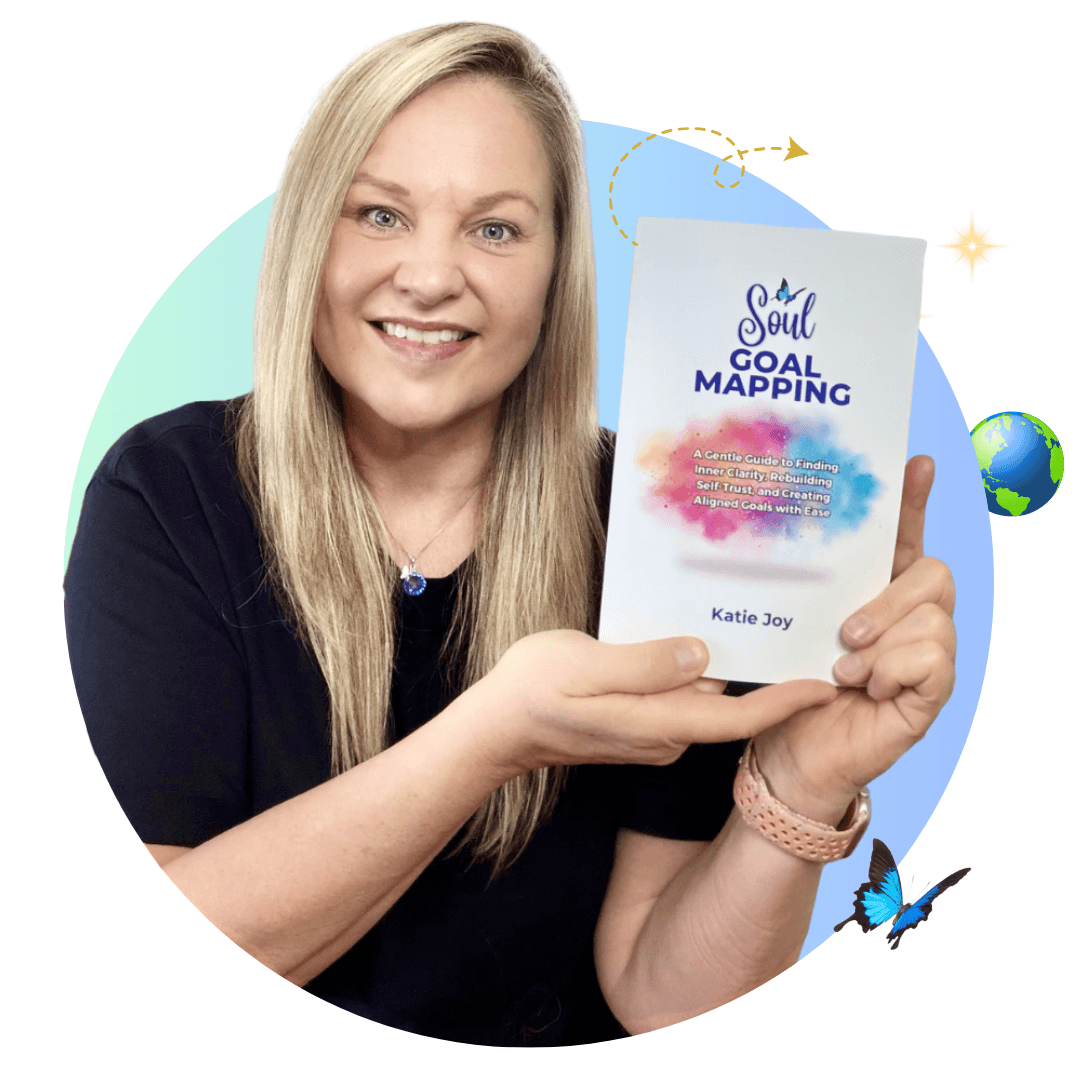
Originally published
23 May 2026
© 2026 Global Butterfly Pty Ltd. All rights reserved.
The Recalibration Effect™ and associated frameworks, language, concepts, and written materials are protected intellectual property and may not be reproduced, copied, distributed, or republished in part or whole without written permission.
You are welcome to reference brief excerpts with clear attribution and links back to:
The Global Butterfly