Why Confidence Isn’t Enough: How to Rebuild Self-Trust and Find Your Way Back to Yourself
Jun 05, 2026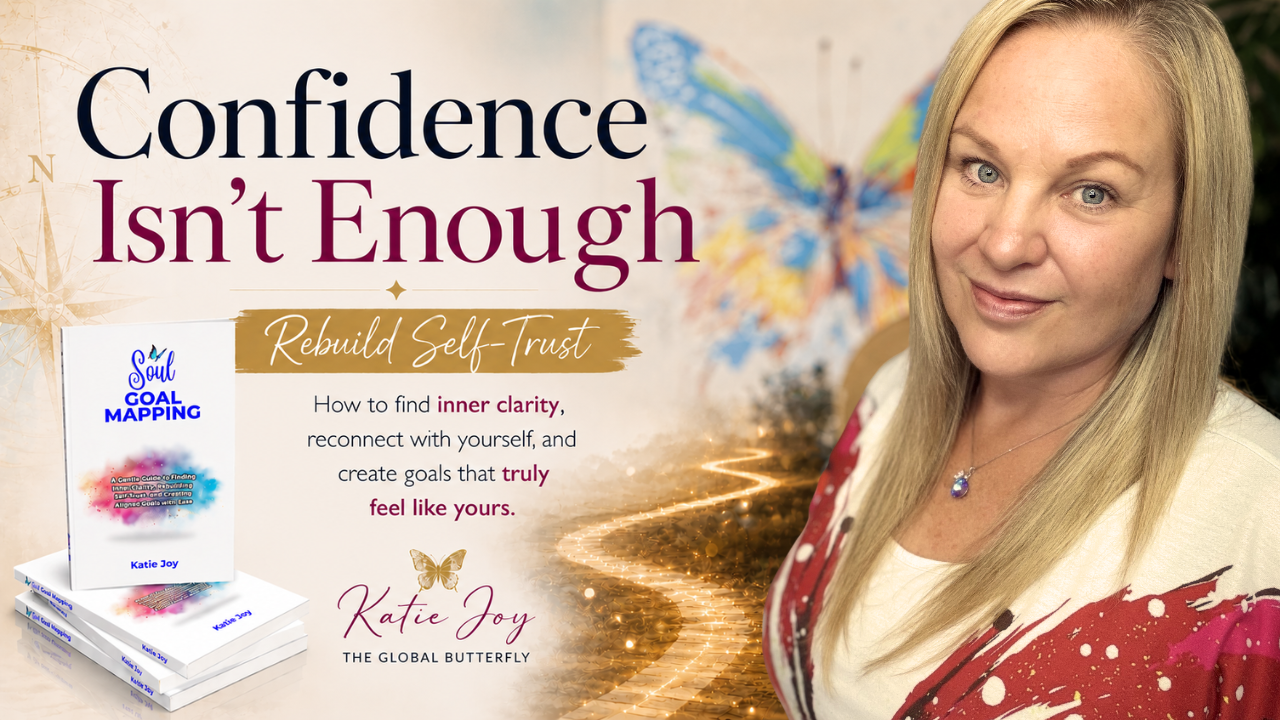
For years, I thought the answer was becoming more confident.
Maybe you have too.
Maybe you’ve read the books, listened to the podcasts, completed the courses, written the affirmations, created the vision boards, set the goals, and tried to convince yourself that this time you will finally believe in yourself enough to create the life you truly desire.
Yet, despite all of that inner work, there may still be a hesitation you cannot quite explain.
You know you are capable. You have survived challenges you never imagined you could walk through. You have solved problems, supported others, adapted, grown, and maybe even achieved things other people admire. From the outside looking in, people might assume you are confident, strong, and have it all together.
But inside, there can still be a quiet uncertainty that whispers:
“Can I really trust myself?”
Recently, I had a profound realisation about this in my own life. After reflecting on some personal experiences, including a simple family interaction that seemed insignificant on the surface, I saw an even deeper pattern emerge.
Sometimes the moments that create the biggest awakenings are not the dramatic ones everyone else can see. Sometimes they are the quiet moments where something within you suddenly recognises an old pattern with new eyes.
I realised that so many people are chasing confidence, but confidence is not actually the thing they are searching for.
The deeper question is not always, “How do I become more confident?”
The deeper question is, “Can I trust myself again?”
And sometimes, even deeper than that, “Can I trust my own perception of reality?”
That distinction changes everything.
The Hidden Reason Confidence Strategies Don’t Always Work
Most confidence strategies assume there is already a strong foundation underneath. They assume you already know who you are, what you want, what matters to you, and where you are going. They assume the missing piece is simply finding enough courage to take the next step.
But what happens when your sense of self has been shaken? What happens when life experiences, relationships, disappointments, responsibilities, or years of trying to meet everyone else’s expectations have disconnected you from your own inner compass?
Throughout some of the hardest chapters of my life, including painful relationships and experiences that challenged everything I thought I knew, I discovered something that completely transformed the way I view personal growth.
The greatest loss after deeply painful experiences is not always losing the relationship, the dream, the money, the home, the opportunity, or the future you imagined.
Sometimes the greatest loss is temporarily losing access to yourself.
When your thoughts, feelings, needs, dreams, or perception of events have repeatedly been questioned, dismissed, criticised, minimised, or misunderstood, you can slowly begin disconnecting from your own inner knowing.
You start questioning things you once felt certain about. You wonder if you misunderstood. You wonder if you are asking for too much. You wonder if you should just be grateful. You wonder if maybe you are the problem.
For deeply caring, compassionate, and self-reflective people, this can become even more confusing because one of your greatest strengths — your willingness to look within, understand others, and see multiple perspectives — can become the very doorway where you slowly abandon yourself.
When You Lose Your Inner Compass: The Real Impact of Self-Doubt
The best way I can describe this experience is like being caught under a huge wave while body surfing.
One moment you are swimming freely, enjoying the ocean, trusting yourself and the rhythm around you. The next moment a wave catches you, pulls you underneath, flips you over, and tumbles you around.
You know there is a surface somewhere. You know oxygen exists. You know you knew how to swim before. But in that moment of being turned around, you cannot tell which way is up.
That is what losing connection with yourself feels like.
The challenge is not that you have forgotten how to swim. The challenge is that you have lost your orientation.
And this is why simply telling yourself to “be more confident” often does not work. Because before you can confidently swim towards the surface, you first need to know which direction the surface is.
Why Successful People Can Still Feel Lost
One of the biggest misconceptions about self-doubt is that it only affects people who are unsuccessful, inexperienced, or who have not done the work.
In my experience, the opposite is often true.
Many of the people I work with are incredibly capable, intelligent, intuitive, and responsible. They have built careers, businesses, families, relationships, and lives that require enormous strength and resilience. They are often the people others come to for support, guidance, and wisdom.
This is also why I wrote The Recalibration Effect™ — Why Highly Capable People Stay Stuck — and How to Safely Expand Into a Bigger Life. Because often the people who feel stuck are not lacking intelligence, ambition, or ability. They are simply operating from an internal identity, nervous system, or version of themselves that was created for a previous chapter of life. Recalibration is the process of gently expanding into who you are becoming without abandoning who you have been.
Yet behind the scenes, they are quietly carrying questions they may never say out loud.
“What do I actually want now?”
“Is this dream really mine?”
“Can I trust myself to make the right decision?”
“What if I believe again, go all in, and everything falls apart?”
On the surface, it can look like fear of disappointment.
But often, it is much deeper.
It is not simply the fear of not getting the outcome you hoped for. It is the fear of trusting yourself, opening your heart, believing in a possibility, building something meaningful, and then feeling like the ground disappears underneath you again.
After enough painful experiences, your mind and body can begin associating hope with risk. Not because you are incapable of dreaming, but because you remember a time when you did dream, you did believe, you did trust, and it hurt.
So the journey forward is not about forcing yourself to ignore those feelings.
It is about learning how to create safety within yourself again.
Finding Inner Clarity: The Step Before Setting New Goals
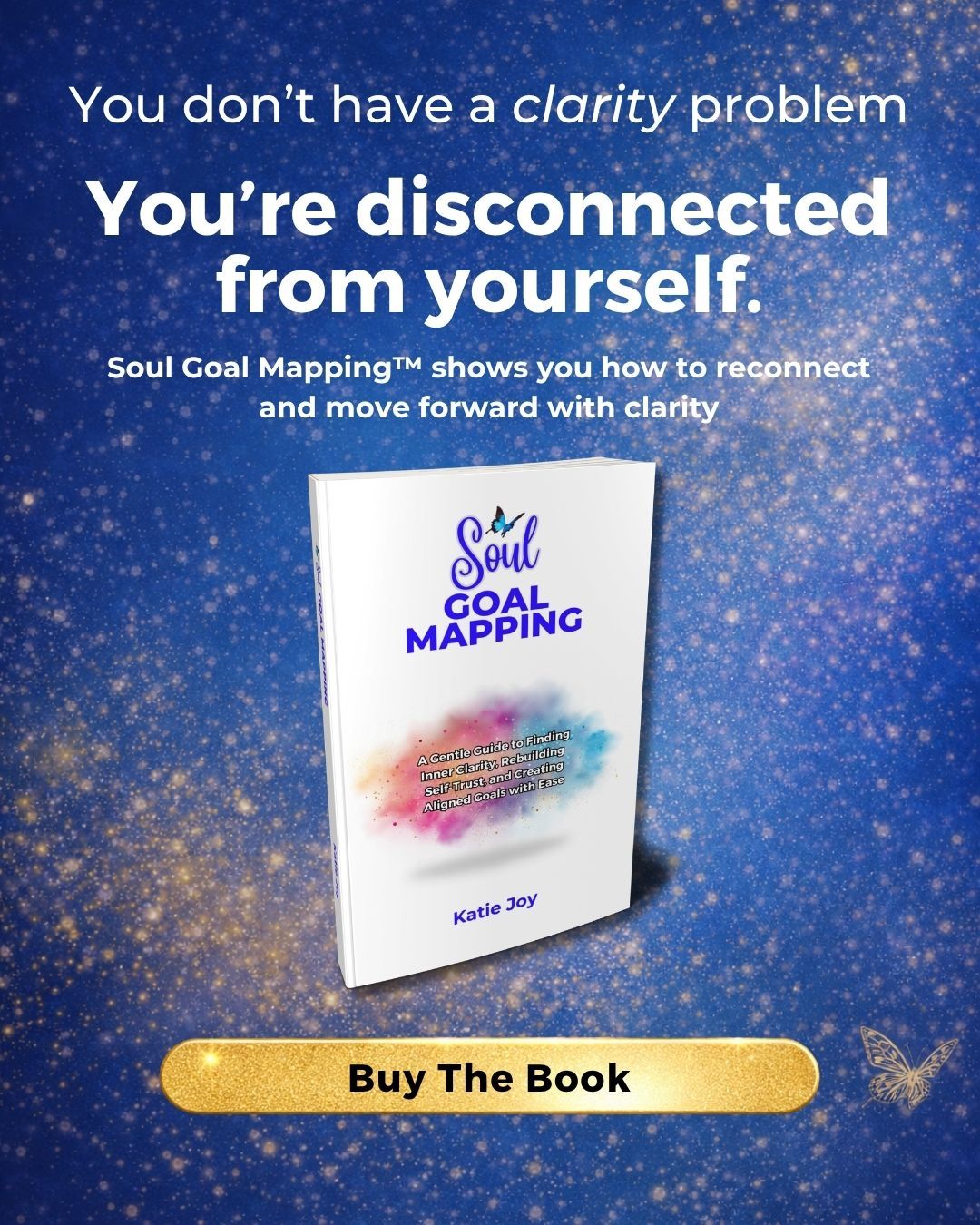
This understanding is one of the reasons I created Soul Goal Mapping: A Gentle Guide to Finding Inner Clarity, Rebuilding Self-Trust, and Creating Aligned Goals with Ease.
Because traditional goal-setting often begins with one question:
“What do you want?”
But I believe there is an important step before that.
Before you can create a life aligned with who you truly are, you need space to reconnect with yourself beneath the expectations, experiences, survival patterns, old stories, and versions of yourself you created simply to get through.
Real transformation does not require you to destroy everything you have built. Often, the most powerful changes happen through small, intentional recalibrations that honour where you have been while creating space for where you are going. This is why I often talk about the importance of creating your next chapter without burning your life down.
You need space to ask deeper questions.
Who am I when I stop trying to prove myself?
What do I know when I stop needing everyone else to validate it?
What feels true when I become quiet enough to listen?
What dreams are genuinely mine?
Because the goal was never just to achieve more.
The deeper journey is remembering who you are.
Rebuilding Self-Trust and Learning to Hear Yourself Again
Self-trust is not created in one big transformational moment. It is rebuilt through a relationship with yourself, one aligned choice at a time.
It grows every time you pause long enough to listen to your intuition. Every time you acknowledge what you feel instead of immediately explaining it away. Every time you honour your needs, your values, your dreams, and your own inner wisdom.
You do not rebuild self-trust by forcing yourself into a bigger, louder, more impressive version of yourself.
You rebuild self-trust by returning to the truth of who you have always been.
Looking back now, I can see that some of the hardest chapters of my life were not here to destroy me. They became part of the journey that helped me understand myself, others, and the work I am here to share at a much deeper level.
They taught me that many people are not searching for another achievement.
They are searching for themselves.
They are searching for the part of them that existed before the world told them who they should be. Before the disappointments. Before the doubts. Before they learnt to question their own knowing.
Begin Your Journey Back to Yourself with Soul Goal Mapping
If this article has spoken to something within you, perhaps the answer is not to push harder, achieve more, or wait until you finally feel confident enough.
Perhaps this is your invitation to reconnect with yourself first.
Soul Goal Mapping: A Gentle Guide to Finding Inner Clarity, Rebuilding Self-Trust, and Creating Aligned Goals with Ease was created as a gentle pathway back to your own inner compass, so the dreams you create are not based on who you were told to become, but who you truly are.
Inside the book, I guide you through the process of finding inner clarity, reconnecting with your intuition, rebuilding self-trust, and taking aligned action towards meaningful goals that feel authentic to you.
This journey of reconnecting with yourself, mastering your energy, and creating from alignment is also the foundation of the deeper transformational work I guide people through inside The Awakened Soul Program.
Because once you reconnect with yourself, you do not just create new goals.
You create a life that finally feels like yours.
You can begin by reading Chapter One first, or get your copy of Soul Goal Mapping today and begin your journey back to yourself.
[Read Chapter One or Get Your Copy of Soul Goal Mapping]