Why Highly Capable People Still Self-Sabotage — And What Your Nervous System Has To Do With It
May 13, 2026
You do not need more information. You need a safer internal environment to become who you already know you are.
Some of the most exhausted people I work with are not lacking intelligence, ambition, awareness, qualifications, or heart. In fact, they are often the strongest person in the room.
They are the reliable one. The capable one. The one others lean on. The one who has spent years learning, healing, growing, reading, studying, reflecting, trying.
They know what to do.
That is what makes it so frustrating.
Because when someone knows what to do, yet still cannot consistently move forward, their mind often turns against them. They begin questioning their discipline, their worth, their commitment, or quietly fear whether they are somehow “broken.”
What I have observed over thousands of coaching conversations, transformational containers, and deep identity recalibration work is that this is rarely a lack of capability.
More often, it is internal energetic conflict.
A nervous system caught between the desire for expansion and the familiarity of an old identity.
And until people understand this, they continue trying to solve an energetic problem with more pressure, more force, and more self-criticism.
As a former paramedic, I see this pattern very differently to many traditional personal development spaces. My background trained me to assess systems under pressure, recognise patterns quickly, stabilise chaos, and observe what was happening beneath the surface rather than simply reacting to symptoms.
That lens has profoundly shaped the work I do today.
Because people often think they are stuck because they need more confidence, more clarity, or a better strategy. Yet underneath it all, many are simply trying to drive forward with the handbrake on.
The Invisible Brake Most People Do Not Realise They Are Carrying
Have you ever driven a car with the handbrake partially engaged?
The vehicle still moves. You can still get from one place to another. Yet the engine strains. The movement feels heavier than it should. Fuel burns faster. The vehicle works harder than necessary, and over time something begins to wear down.
This is how many people are living.
From the outside, they may appear functional, successful, productive, even high-achieving. Yet internally, there is tension, exhaustion, overthinking, procrastination, emotional shutdown, or cycles of stop-start momentum that make very little logical sense.
Many people experiencing this are not failing because they are doing life “wrong.” They are often caught in a deeper pattern that keeps them stuck, even while they continue trying to do everything right.
So they assume they need to push harder.
They consume more information. Sign up for another course. Read another book. Listen to another podcast. Promise themselves that this time they will finally follow through.
But information alone does not create embodiment.
You can know exactly what to do and still feel physically unable to move.
I recently had a conversation with a woman who told me, “I know this is the next step for me. I know it’s fear. I don’t want to be afraid anymore. I want to step into my power, but a part of me is scared.”
I suspect many people silently relate to that more than they admit.
Part of them longs for expansion.
Another part still believes expansion is unsafe.
This is why highly capable people often self-sabotage at the edge of their next level. It is not because they secretly want to fail. It is because the nervous system is wired for familiarity before possibility.
Your body will often choose a familiar struggle over an unfamiliar level of freedom until it learns that safety exists there too.
Why Intelligent People Delay The Very Thing They Want
One of the most fascinating patterns I observe in highly capable people is the tendency to wait until the very edge of the decision before they move. On the surface, it can appear like uncertainty, procrastination, or indecision. Yet underneath it, there is often something far deeper happening internally.
The nervous system is trying to delay the death of familiarity.
They are not usually confused intellectually. They are negotiating emotionally with the loss of an old identity. And the delay itself becomes a coping strategy.
Because once a real decision is made, something begins changing immediately. Even before external circumstances shift, the identity begins reorganising itself around a new possibility. For many people, that feels both exciting and deeply uncomfortable at the same time.
So they pause. They circle. They revisit the same thoughts repeatedly. They wait for complete certainty before they move, believing that confidence will arrive first and action will follow after.
Yet in most transformational seasons of life, clarity deepens through movement, not before it.
This is why so many intelligent, self-aware, deeply capable people remain standing at the threshold of the very life they say they want. It is not because they lack desire, ambition, or potential. Often, it is because some part of their nervous system still associates the unknown with danger, even when their soul recognises it as expansion.
And this is also why pushing harder rarely creates lasting change.
Pressure can force temporary action, but sustainable transformation requires something deeper. It requires creating enough internal safety that the next level of your life no longer feels like a threat to your identity.
Why Thriving People Still Feel Called Toward Change
One of the biggest misconceptions around transformation is that people only seek change when life falls apart.
Sometimes that is true. Crisis can absolutely become a catalyst.
But many people feel the call toward change while life still looks “good” on the surface.
They have built successful careers. They are responsible. Respected. Intelligent. Capable. Yet something inside them knows they have outgrown the version of life they are currently living.
For many people, this becomes the moment when who they’ve been no longer fits, yet they have not fully anchored into who they are becoming.
This is where people often become confused.
They tell themselves they should be grateful because technically everything is fine.
And they are grateful.
But gratitude and expansion are not mutually exclusive.
I see this especially with highly responsible adults who have spent decades proving themselves through achievement, productivity, caregiving, or carrying enormous levels of responsibility. Eventually, the soul begins asking different questions.
Is this how I want to spend the next decade of my life?
Why does everything feel so heavy when I have worked so hard to create stability?
Why do I feel disconnected from joy?
Why do I keep delaying the things that truly make me feel alive?
What many people do not realise is that there are seasons where your next evolution does not come from surviving more hardship. It comes from allowing yourself to expand before crisis forces the issue.
That takes courage.
Because expansion often requires releasing identities that once kept you safe.
The Nervous System Cannot Sustain A Life Your Soul Has Already Outgrown
This is why I speak so often about stabilisation before direction.
Most people try to force clarity while dysregulated, exhausted, overwhelmed, emotionally flooded, or mentally over-stimulated. Then they become frustrated when they cannot hear themselves clearly.
Your state shapes your perception.
When the nervous system is in survival mode, the future is interpreted through fear, past experiences, hypervigilance, and self-protection. People begin making decisions from old wounds instead of present awareness.
The body remembers.
Even when the conscious mind says, “I want more.”
This is why transformation work must include nervous system safety and identity recalibration. Otherwise people continue trying to build a new reality while operating from the internal architecture of the old one.
And that creates exhaustion.
I often explain this using another story from my paramedic training.
Part of our emergency response training involved learning how to control vehicles at high speed under dangerous conditions. We were taught that when a vehicle begins sliding toward a wall, your instinct is to stare directly at the danger.
But the instructors repeated the same thing over and over again:
Keep your eyes on where you want to go.
Because attention directs movement.
The moment you lock onto the wall, you dramatically increase the likelihood of hitting it.
Human beings do this psychologically every day.
They become so focused on avoiding failure, rejection, disappointment, embarrassment, burnout, or pain that their entire nervous system becomes oriented toward the very thing they fear.
Then they wonder why life feels heavy.
You Are Not Starting From Scratch — You Are Rebuilding From Awareness
One of the most beautiful parts of this work is watching people realise they are not lazy, incapable, weak, or failing.
They are often simply exhausted from carrying old internal survival patterns long after those patterns stopped serving them.
When people begin rebuilding internal safety, something remarkable happens.
Their intuition sharpens.
Their emotional reactions soften.
Their energy becomes clearer.
Decision-making becomes easier.
The need to force everything begins dissolving.
Life starts feeling lighter because there is less internal conflict consuming energy behind the scenes.
And perhaps most importantly, they stop abandoning themselves in the process of trying to become successful.
This is the work beneath the work.
The invisible becoming visible.
Not through hype or performance. Through learning how to become safe enough within yourself that your next level no longer feels like a threat to your nervous system.
Because sometimes the greatest transformation is not becoming somebody else.
It is finally allowing yourself to fully become who you already are.
If this article stirred something inside you — not just mentally, but somewhere deeper in your body — perhaps this is your invitation to stop trying to force yourself forward through pressure, overthinking, or self-criticism, and begin understanding the patterns that have truly been running beneath the surface.
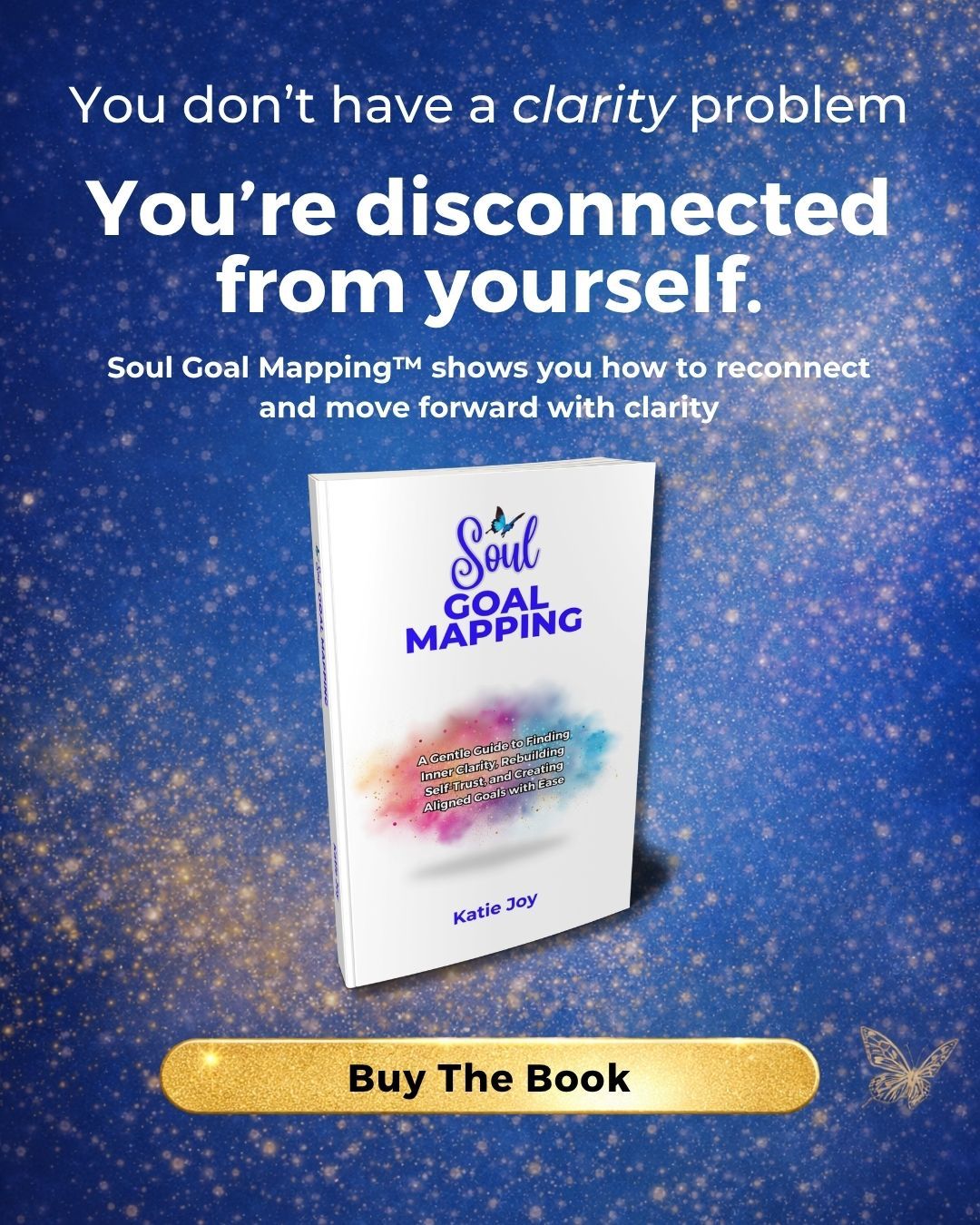
My book, Soul Goal Mapping™, was written to help you recognise those patterns, reconnect with yourself, and begin creating change from a place of inner safety, clarity, and alignment rather than survival mode.
You can begin by reading Chapter 1 free, or if you already know this message is for you, order your copy here:
www.theglobalbutterfly.com/soul-goal-mapping
Because sometimes the next chapter of your life does not begin with pushing harder.
It begins with finally understanding yourself differently.