Chapter One
A Gentle Beginning
Take a breath.
There’s nothing you need to force here.
Just read… and notice what lands.
Optional: listen before you begin
🎧 Holding Pattern
If your mind is busy… pause here for a moment.
Let yourself arrive before you read.
Why So Many Capable People Feel Overwhelmed and Stuck
There is a particular kind of stuckness that often goes unnamed. It does not arise from a lack of intelligence, effort, or commitment. It appears quietly, beneath the surface of lives that look functional, responsible, and even successful. In today’s world, many capable people find themselves living inside this experience, overwhelmed not by a lack of opportunity, but by its abundance.
Never before have there been so many options available. Career pathways, business ideas, personal development frameworks, healing modalities, creative outlets. All readily accessible. All offering promise. Yet rather than creating clarity, this constant stream of possibility often leads to disorientation. Attention is pulled outward again and again, subtly training the system to look externally for direction.
Over time, this creates a sense of dis-calibration.
Capable people feel this particularly strongly. They are used to adapting, learning, and taking responsibility. They know how to function well and move forward when something needs to be done. Because of this, they often rely on logic, effort, and problem-solving when clarity feels absent. The assumption is that direction will arrive if they just think hard enough or do more.
But clarity does not respond to force.
True direction emerges from alignment, and alignment requires an internal reference point. When attention remains externally focused for too long, the inner compass grows quieter. Not because it disappears, but because it is no longer being consulted. When that happens, even the most capable person can begin to feel stuck.
This is where a subtle frustration often settles in. A sense of being behind, despite having done so much. The quiet thought that something should be clearer by now. Many people do not articulate this aloud, yet it shapes their internal experience. They continue doing what makes sense, what is expected, what appears responsible, while something deeper signals that the path they are on is not quite true.
Over time, fitting in can feel safer than listening inward.
This is not a failure of ability. It is a misalignment between external direction and internal truth.
I saw this clearly through Rachel’s experience.
I did not meet Rachel directly at first. I met her daughter, Karla, by chance at a campsite, where conversation led naturally to the mention of a live five-day Soul Goal Mapping™ Challenge I was running online. Karla felt drawn to it and decided to join. When she went home and told her mum about it, Rachel asked if she could join too.
At that time, Rachel was navigating a transitional period in her life. She described herself as feeling stuck and lost, unsure of her direction. From the outside, there was nothing to suggest collapse or dysfunction. She was capable, thoughtful, and deeply self-aware. Inside, however, she felt disoriented, not because she lacked ideas, but because none of the available options felt anchored.
Rachel could see multiple paths forward. All of them were reasonable. All of them made sense. And none of them felt true. Years of responding to what was required and sensible had slowly shifted her attention away from her own internal signals. What she experienced as being “stuck” was not an absence of ability, but an absence of internal reference.
What shifted things for Rachel was not being given answers. It was being guided back to herself. As the pressure to decide dissolved, her system softened. Clarity returned gradually, not as a rigid plan, but as a felt sense of alignment. Confidence followed, grounded in self-trust rather than urgency.
Her capability had never been in question.
What she needed was space to recalibrate and listen inward again.
Feeling stuck, then, does not mean you are incapable. It points to the difference between ability and clarity. When clarity is missing, self-pressure often fills the gap. The mind interprets hesitation as something being wrong, and comparison quietly amplifies that pressure. In a world saturated with curated success stories, it becomes easy to mistake someone else’s outcomes for your own direction.
This pressure compounds overwhelm. Decisions stall. Confidence wavers. Action feels heavy. Not because you are unwilling, but because something within you does not yet feel safe enough to choose.
At its core, this experience is not about motivation. It is about safety.
The nervous system is always orienting toward one fundamental question. Am I safe? When the answer feels uncertain, even subtly, movement into the unknown is resisted. This is not a flaw. It is an intelligent response. Yet many people attempt to override it through force, mistaking pressure for progress.
Momentum does not come from pushing harder. It comes from restoring internal safety.
When you remind yourself that you are safe, genuinely and consistently, the system begins to relax. You do not need to see the entire path ahead. You only need to take the next aligned step. Small, intentional movements made with curiosity and compassion build a deeper kind of certainty, one rooted in self-trust rather than external validation.
This certainty grows through experience. Through discovering that you can stay present in both calm and chaos. That you can navigate imbalance without abandoning yourself. That you can meet uncertainty without losing your centre.
The cost of staying stuck, however, is cumulative. Mental load increases. Emotional fatigue sets in. Decisions are delayed. Procrastination appears, not as a character flaw, but as a system attempting to protect itself. Over time, doing nothing begins to feel safer than choosing, because stillness is familiar, even when it is uncomfortable.
Clarity, however, does not arrive through waiting alone.
It arrives through movement.
Like a car that must be in motion to receive feedback from the road, direction becomes clearer once you begin. Not perfectly. Not all at once. But enough to take the next step, and then the next.
Feeling stuck is not a dead end.
It is an invitation to return to yourself.
The Quiet Disorientation of Transition
For many capable people, the experience of feeling overwhelmed or stuck is difficult to describe because it does not arrive as chaos. It arrives as quiet tension. A subtle sense of fragmentation. A feeling of being internally pulled in multiple directions while outwardly continuing to function.
Life keeps moving. Responsibilities are met. Conversations are held. Decisions are made, at least the smaller ones. And yet, beneath the surface, something feels unresolved. Not urgent enough to collapse everything, but persistent enough to drain energy over time.
This is often where people begin to question themselves.
They wonder why they feel tired despite doing all the right things. Why motivation fluctuates. Why clarity seems to come and go rather than stabilise. Why even simple decisions can suddenly feel heavier than they should. The mind searches for answers, assuming the problem must be a lack of focus, discipline, or commitment.
What is actually happening is more subtle.
When attention is repeatedly pulled outward, toward expectations, timelines, comparisons, and possibilities, internal coherence begins to thin. Energy becomes distributed across too many reference points. Instead of moving from an inner centre, action becomes responsive and externally led. Over time, this creates the sensation of being busy but not grounded, active but not anchored.
This is not indecision in the usual sense.
It is disorientation.
Many people describe it as feeling scattered, foggy, or mentally overloaded. Others experience it as emotional flatness, restlessness, or a persistent sense that something important is being missed. There may be an underlying grief for paths not taken, or a quiet sadness that life does not feel as alive as it once did, even when nothing is technically wrong.
Because this experience does not fit neatly into language, it often goes unnamed.
And when an experience remains unnamed, it tends to be judged.
People begin to interpret this internal state as personal failure or weakness. They tell themselves they should be clearer by now. More decisive. More certain. They compare their internal uncertainty with the apparent confidence of others and assume they are behind in some invisible way.
What rarely gets acknowledged is that this state often appears at a threshold. A point where an old way of orienting to life has run its course, but a new internal reference point has not yet fully stabilised.
It is not collapse.
It is transition.
During these periods, the nervous system is recalibrating, even if the mind does not yet understand what is changing. Familiar strategies stop working. External validation loses its power. Pushing forward without alignment becomes exhausting rather than productive. This can feel unsettling, especially for those who are used to being competent and capable.
The temptation at this stage is to override the discomfort by doing more. More learning. More planning. More refining. Yet this often deepens the sense of overwhelm, because the system is already saturated. What is needed is not more input, but a return to internal coherence.
This is where self-pressure quietly becomes the enemy.
The internal narrative of being behind creates a background tension that fragments attention even further. The system remains on alert, scanning for certainty, reassurance, or permission to move. In this state, clarity cannot land. Not because it is absent, but because there is no space for it to be felt.
Choosing nothing can begin to feel safer than choosing something, because uncertainty carries perceived risk. Doing nothing preserves familiarity, even if it also preserves dissatisfaction. This is why people can remain in this state for months or even years, waiting for a signal that feels safe enough to act on.
What is often misunderstood is that clarity does not arrive as a complete picture.
It arrives as a felt sense.
A subtle internal alignment. A quiet yes. A sense of rightness that may not yet be logical, but is unmistakable when honoured. This kind of clarity cannot be accessed through pressure or comparison. It requires stillness, honesty, and a willingness to listen inward again, even when the next step is small and undefined.
When this internal reference point begins to re-emerge, overwhelm starts to dissolve. Not instantly, but steadily. Energy gathers. Decisions feel lighter. Momentum returns, not through force, but through coherence.
This is the point where many capable people realise they were never lacking direction.
They were simply disconnected from the part of themselves that knows.
What I See Again and Again
After years of working with capable, intuitive, intelligent people, I have come to recognise this state quickly. It presents differently on the surface, but the underlying pattern is remarkably consistent.
These are not people who lack insight. In fact, they often have too much of it. They can see the nuances, the possibilities, the implications of every choice. They are thoughtful, conscientious, and deeply aware. They care about doing things well, and doing them in a way that is meaningful.
And yet, they find themselves circling.
What they usually say sounds like confusion. What is actually happening is something else. They are trying to make internally aligned decisions from an externally referenced system.
This is the moment where many people reach for strategies, plans, or structure, believing that clarity will come once the right framework is found. They sign up for another course. They refine their thinking. They attempt to optimise their next move. All of this looks productive, yet very little shifts internally.
This is because strategy cannot resolve misalignment.
When someone is in this state, doing more does not create clarity. It fragments it further. Each new idea adds another point of reference, another possible direction, another internal question. Instead of anchoring, the system becomes more saturated.
This is why pushing harder fails here.
Effort amplifies noise when the system is already overloaded. Discipline becomes self-pressure. Motivation turns into obligation. And action, when it does happen, feels heavy rather than energising.
I see people blame themselves for this. They assume they are avoiding something, lacking commitment, or being resistant. In reality, their system is signalling that it does not feel safe enough to move in the way they are attempting.
Safety is not created through urgency.
It is created through coherence.
When someone feels internally coherent, action flows naturally. Decisions feel clean. Energy gathers instead of disperses. Momentum builds without force. This is not because life becomes simpler, but because the internal reference point is restored.
One of the most common misunderstandings I see is the belief that clarity must come before action. In truth, clarity often follows the right kind of movement. Not frantic movement, and not movement driven by comparison or expectation, but movement that is small, honest, and internally anchored.
This is why I rarely start with goals in the way people expect.
When someone is dis-calibrated, asking them to define where they want to go can increase pressure rather than reduce it. The system is already trying to stabilise. What it needs first is regulation, permission, and space to listen inward again.
Once that happens, something shifts.
People stop asking, What should I do?
They start asking, What feels true?
That question changes everything.
From there, clarity emerges organically. Not as a rigid destination, but as a direction that feels alive. Confidence follows, not because certainty has been guaranteed, but because self-trust has been restored.
This is also where comparison begins to lose its grip. When someone is anchored internally, other people’s paths no longer feel threatening or confusing. Inspiration replaces pressure. Discernment replaces urgency.
I have watched people move out of years of stagnation not by pushing, but by recalibrating. Not by forcing decisions, but by restoring safety and coherence first. The moment they stop fighting themselves, momentum returns.
This is why I say, with absolute certainty, that feeling stuck is not a personal failing.
It is a signal.
A signal that an old way of orienting to life has reached its limit. A signal that your system is asking for alignment before action. A signal that clarity will not be found by looking further outward, but by returning inward.
Once that signal is honoured, everything changes.
Not all at once.
Not dramatically.
But steadily, and in a way that lasts.
A Moment I Recognise Instantly
There is a moment that happens often in my work, and once you have witnessed it enough times, it becomes unmistakable.
It usually appears early in a Zoom session. The person on the screen may not be polished or articulate. Sometimes they are emotional. Sometimes they are tired. Sometimes they speak in circles or struggle to find the words. What is consistent is not how clearly they speak, but what they are trying to convey.
They usually know what they do not want anymore. A role that has run its course. A way of living that feels constrictive. A version of themselves they have outgrown. Occasionally, they can name what they want, but almost always it is followed by uncertainty about how it could possibly happen for them.
As they talk, I am not listening for coherence. I am listening for permission.
I remember one woman in particular who came to a session visibly conflicted. She spoke about her life carefully, almost cautiously, as though she needed to justify every thought. She described a future she felt drawn to, then immediately softened her voice, explaining why it might not be realistic. She had already prepared the reasons it might not be possible.
What stood out was not her uncertainty about the path. It was her hesitation to allow herself to want what she wanted.
At one point, I asked her a simple question. I asked her whether she felt she was allowed to have the life she was describing.
She went quiet.
Then she shook her head.
That was the moment everything became clear.
Her lack of movement had nothing to do with motivation or clarity. It had everything to do with self-permission. She had learned, over time, to contain her desires, to make them smaller, more sensible, more acceptable. Wanting something deeply for herself felt risky. Almost indulgent.
We did not move into strategy.
Instead, we stayed with that recognition. We explored where she had learned to prioritise responsibility over possibility. Where she had absorbed the belief that wanting more meant being unrealistic, selfish, or unsafe. As her system softened, her posture changed. Her breathing slowed. The tension she had been carrying eased.
She did not suddenly know how to get where she wanted to go.
What changed was that she stopped arguing with the desire itself.
In the weeks that followed, clarity emerged in a different way. Not through pressure or planning, but through allowance. New ideas felt less threatening. Possibilities that once felt out of reach began to feel available. Her energy shifted before any external decision was made.
This is a pattern I see repeatedly.
People are not blocked because they lack vision. They are blocked because they have not yet given themselves permission to want what they want, without justification. Until that permission is present, even the clearest goal will feel distant.
When someone allows themselves to acknowledge their true desire, without immediately negotiating it down, something fundamental changes. The system relaxes. The inner conflict dissolves. From that place, movement becomes possible.
Not forced.
Not rushed.
But honest, and sustainable.
When Stuck Becomes a Turning Point
If you recognise yourself anywhere in this chapter, there is nothing you need to fix.
Feeling overwhelmed or stuck does not mean you have failed to figure something out. It does not mean you are behind, resistant, or incapable. More often, it means that the way you have been orienting to your life no longer fits who you are becoming.
This is an important distinction.
There are moments when pushing forward works. And there are moments when pushing forward is precisely what keeps you stuck. The experience you have been reading about is not a lack of momentum. It is a pause that carries information. A signal that something deeper is asking to be acknowledged before the next step can emerge.
Many capable people reach this point without realising it. They keep trying to decide from the same place that created the tension in the first place. They look for clarity through thinking, planning, or comparing, while their system is quietly asking for something else entirely.
What it is asking for is permission.
Permission to stop negotiating with your own knowing. Permission to admit that what once worked no longer does. Permission to want what you want, even if you do not yet know how it could come to life.
This is not indulgent. It is honest.
And honesty is the foundation of alignment.
When you stop interpreting stuckness as a problem to be solved and begin to meet it as a message to be listened to, the experience changes. The pressure eases. The internal conflict softens. You are no longer trying to force clarity. You are creating the conditions for it to arise.
This is where real movement begins.
Not with a plan.
Not with certainty.
But with a return to internal truth.
The moment you stop asking, What should I do? and begin asking, What feels true now? something shifts. You move from external reference to internal authority. From effort to coherence. From self-pressure to self-trust.
This does not mean answers arrive instantly. It means the right questions begin to surface. And the right questions, held honestly, will always lead you somewhere meaningful.
In the next chapter, we will explore what happens when you begin to restore that internal authority more deliberately. How clarity actually forms when it is not rushed. And why learning to listen to yourself again is not vague or abstract, but practical and deeply stabilising.
For now, let this land.
If you are feeling stuck, you are not at the end of something.
You are at the beginning of a different way of moving forward.
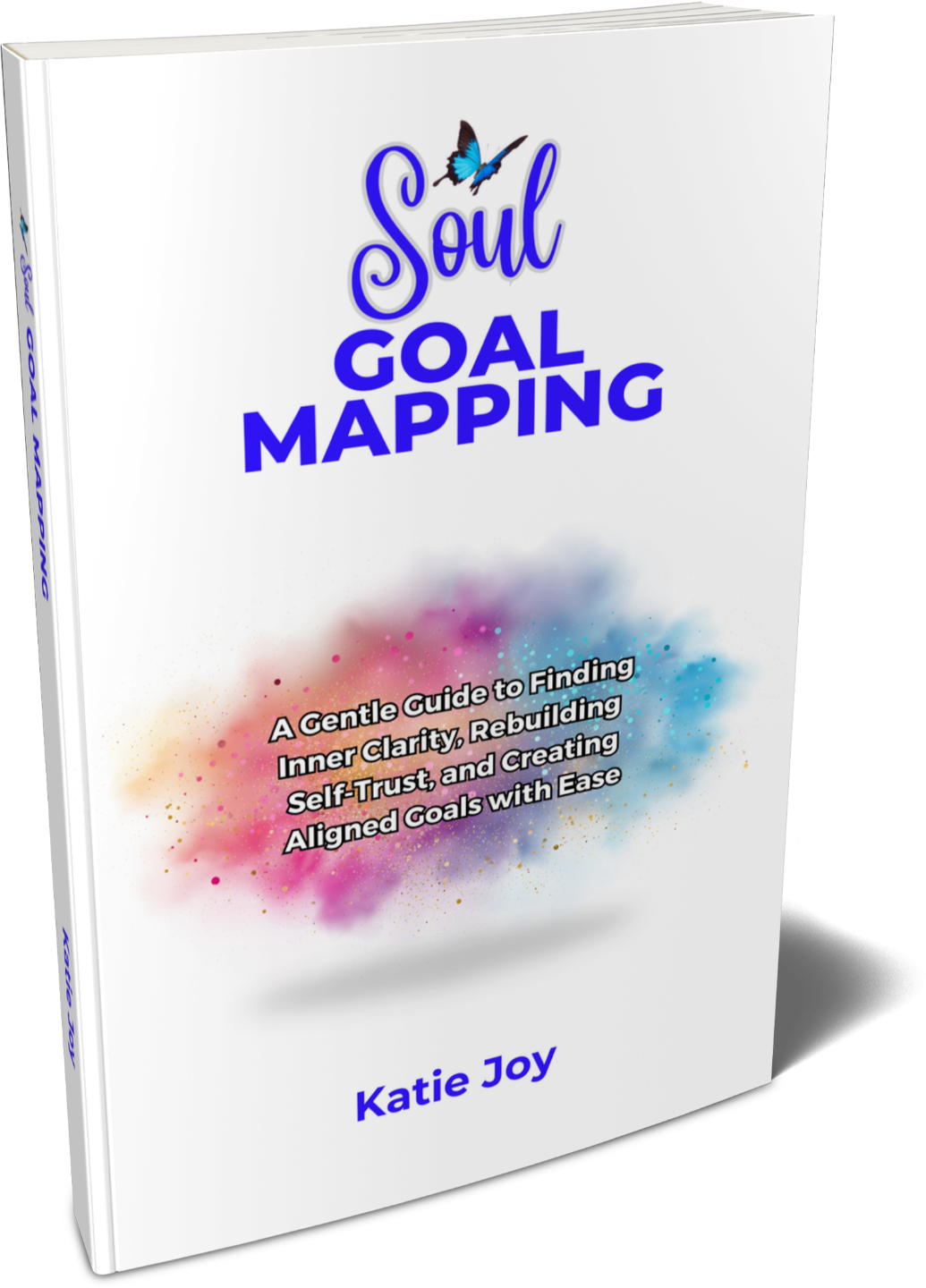
If this is already resonating…
👉 Continue reading the full book
Flat rate shipping applied at checkout
FAQ
Is this for me if I’ve already done personal development work?
Is this a book I read once or return to?
Will this tell me exactly what goals to set?
Why is this book different from other personal development books?
Should I read Chapter 1 first?
What happens after I read the book?
Is this a physical book or digital?
How long does shipping take?
What if this doesn’t work for me?
Will this be easy to understand?
I entered the wrong address—what should I do?
My order hasn’t arrived—what now?
I didn’t receive my email—what should I do?
What currency will I be charged in?
Can I cancel my order after purchase?
Flat rate shipping applied at checkout
Order your copy here and begin the journey
Orders are prepared and dispatched with care.
Please allow a short processing time.
© Katie Joy / Global Butterfly Pty Ltd. All rights reserved.
This content may not be reproduced, distributed, or shared without permission.